Friday, January 12, 2024

25.0 Titicaca

It is irrelevant whether we call ourselves tourists or voyagers. Note that we avoid the traveller word as, although Paul does come from Morecambe, there are no family links with Tyson. We could say, 'it's all about the journey', and some of it is, but what we are doing is travelling between a succession of destinations and we just prefer to do it on a motorbike. But one way or another we are recognised as tourists, albeit somewhat peculiar ones. And tourists visit Lake Titicaca.


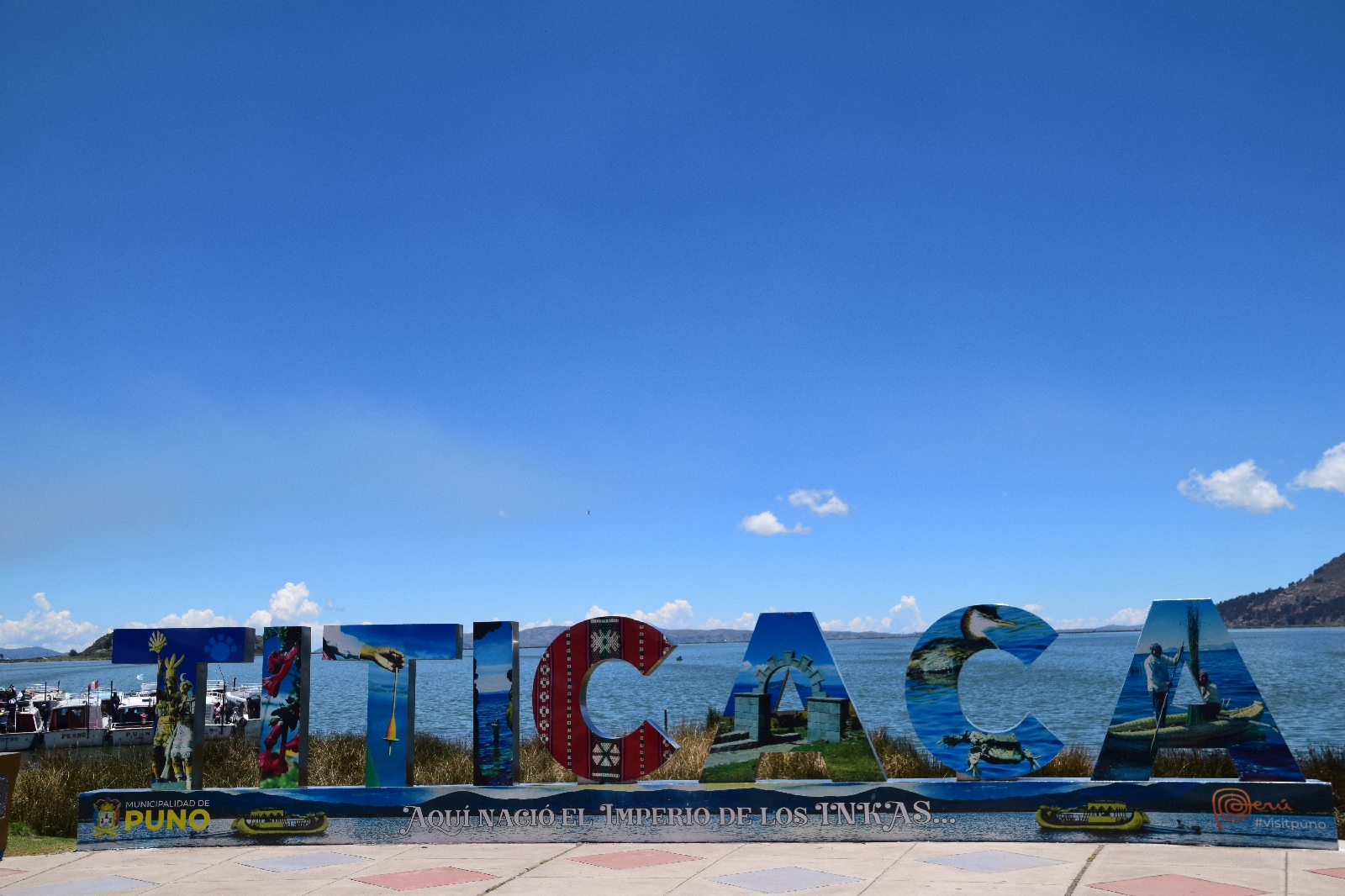
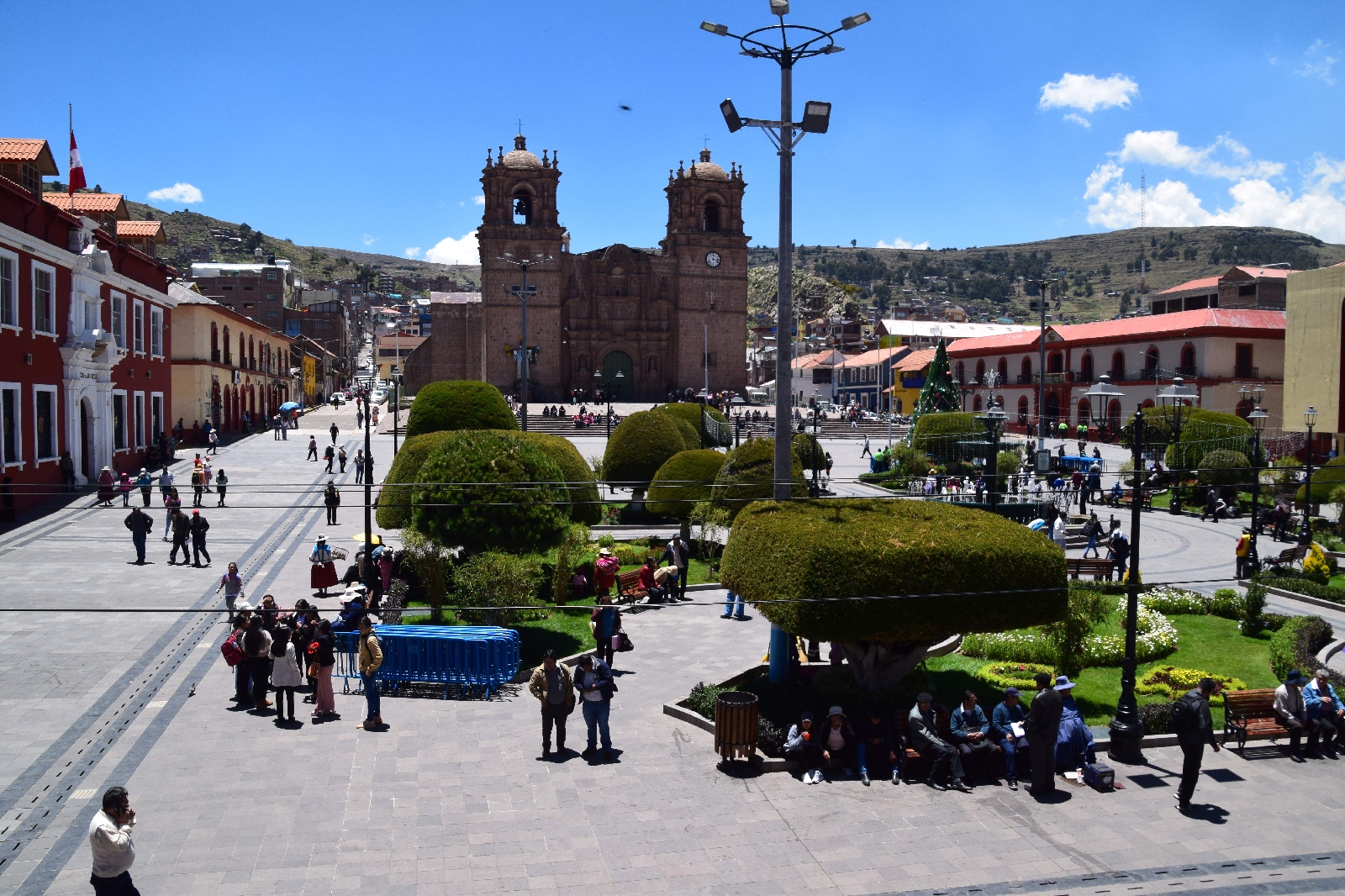
We arrived in Puno. We are writing this a few days later. Puno is on the shores of Lake Titicaca and is the base for visiting it. Lake Titicaca is the highest navigable lake in the world at just over 3,800m and the second largest lake in South America. Puno sits on a shallow bay on the Peruvian, as opposed Bolivian, part of the lake. But you don't come to Lake Titicaca to admire its elevation or size; at least the vast majority of tourists don't. You come here to see the floating islands and it is in the bay on which Puno sits that the reeds grow that make the floating islands. We are clearly in South America and particularly Peru now.
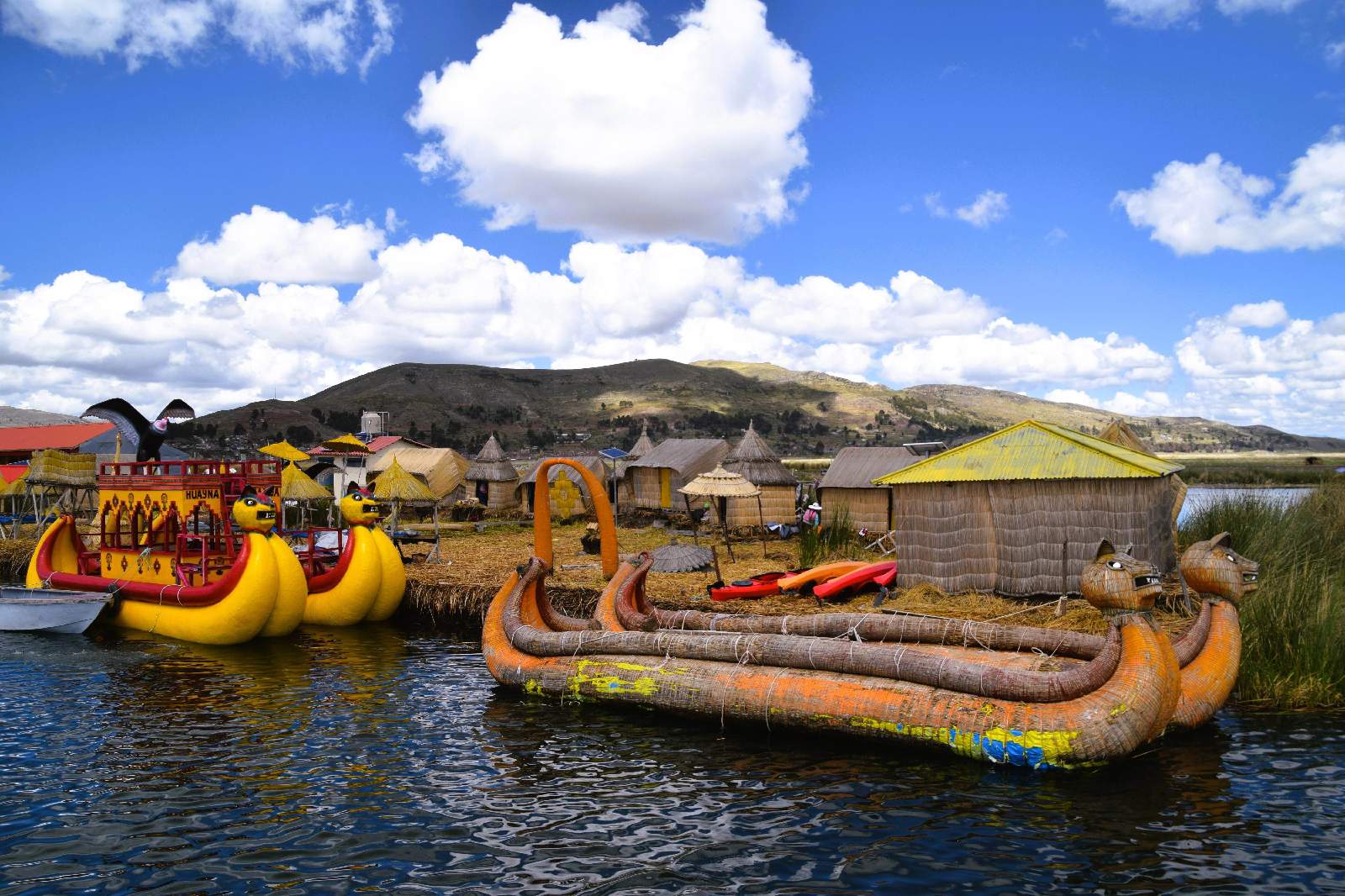
The Uros people live on the floating islands but more about that later. When the Incas conquered the areas the Uros people weren't that keen on the ritual beheading and sacrificing the Incas imposed on people they conquered, so they moved off the land onto floating islands in the lake made from reeds to distance themselves from the Incas. There was an abundant supply of fish and clearly plenty of fresh water and maybe they weren't too strict on their five a day. There are currently about 2,000 Uros on the islands. The islands are made of big lumps of entangled reef root fixed together and then covered with alternating layers of cut reed. They are anchored to the lake bed with ropes and stones and are clearly floating because you can feel them move, despite their size, when you jump up and down. The islands vary in size from about 500m2 to 1,000m2 and have reed huts for the inhabitants to live in. Each island lasts about 40 years and takes about 18 months to build. All this from our Guide.

To get to the islands you take a tourist boat from Puno; one of those flat bottomed ones that takes about 30 people that you often see on European rivers. Flat bottomed because the bay is only 2m deep. Were the Incas really put off by 2m of water? When approaching the island community, you see some relatively large constructions that are the school and medical facility made of timber, metal and even glass. You also see similar constructions made of the same materials that are clearly habitations. The guide did not mention these. Each tourist boat moors up to a different island. After all the islands are not, individually, very big. Ours was relatively small and called Condor Isla. We met the fifteen people, from five families, that lived on the island. Each had their own abode which was a single storey, single room reed hut. They has some PV panels and some unfinished, due to Government corruption, sanitation. 
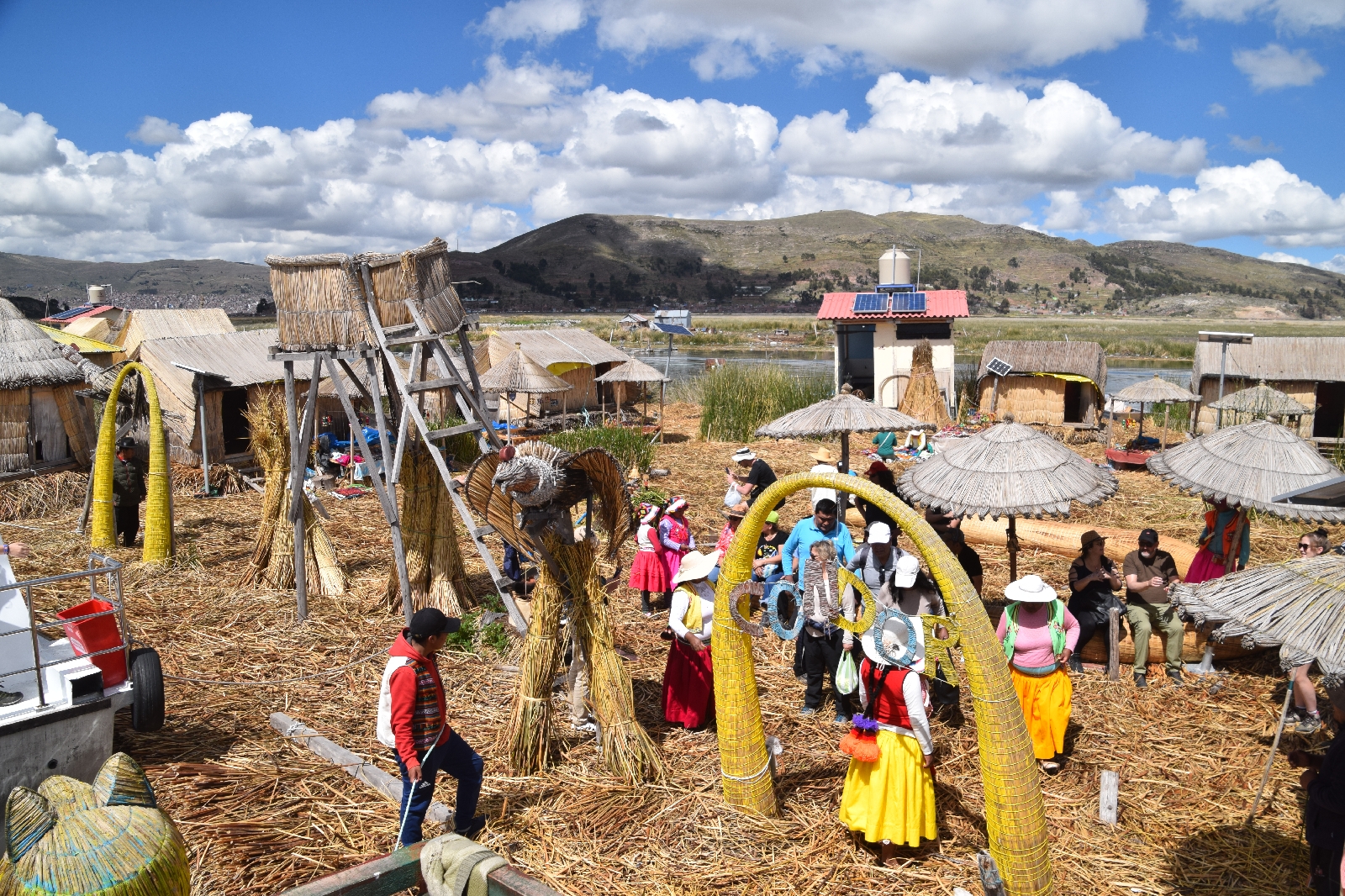
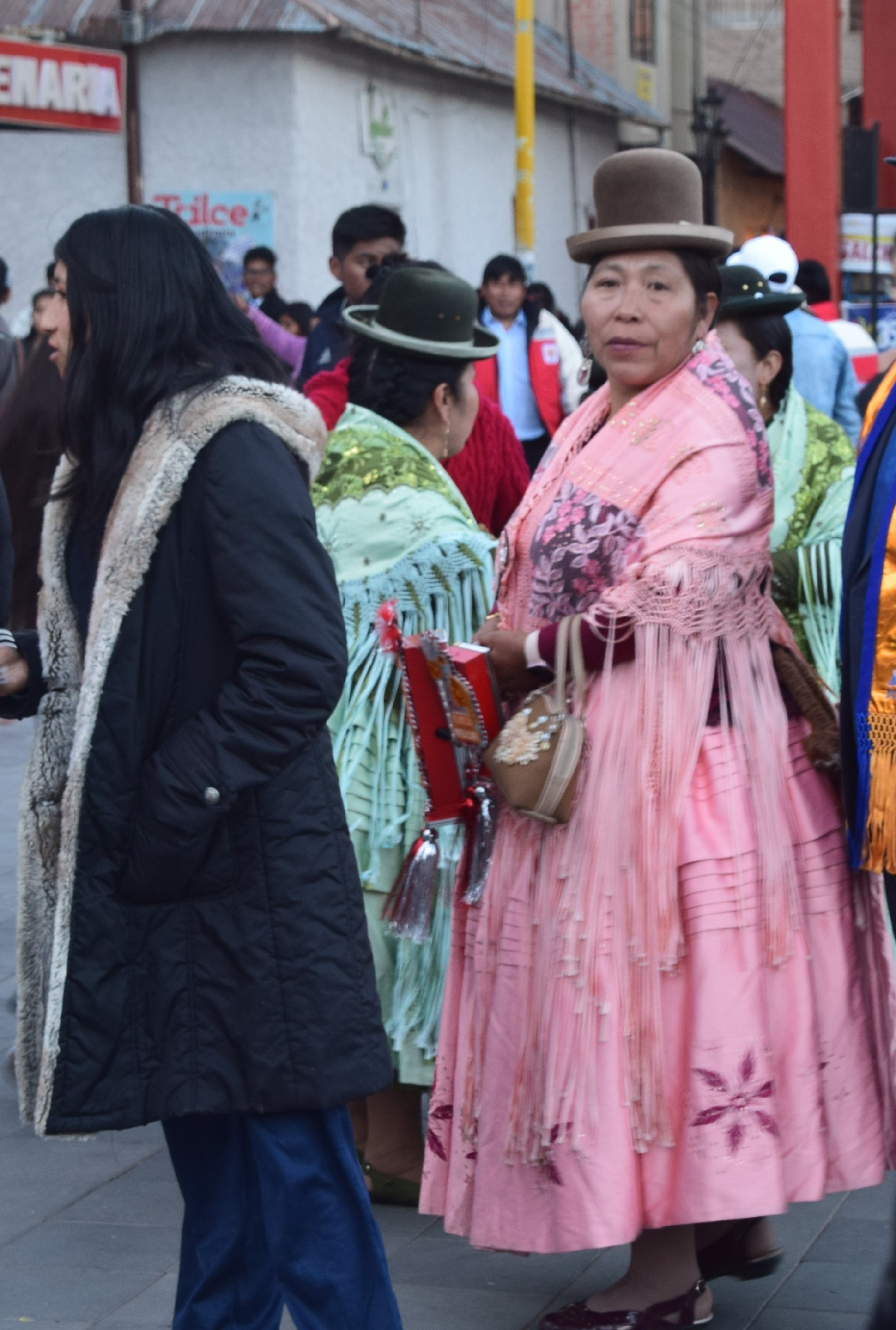
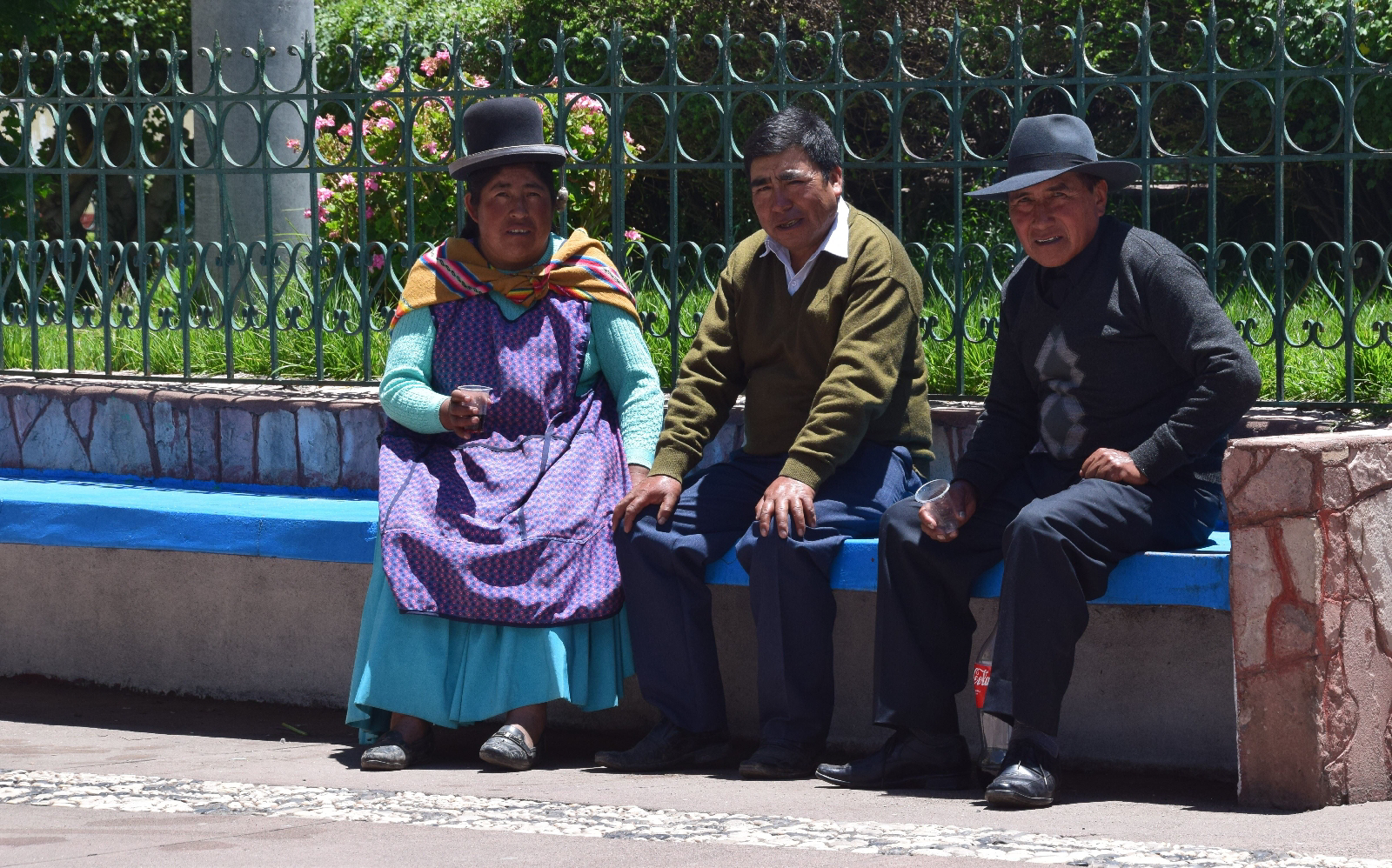
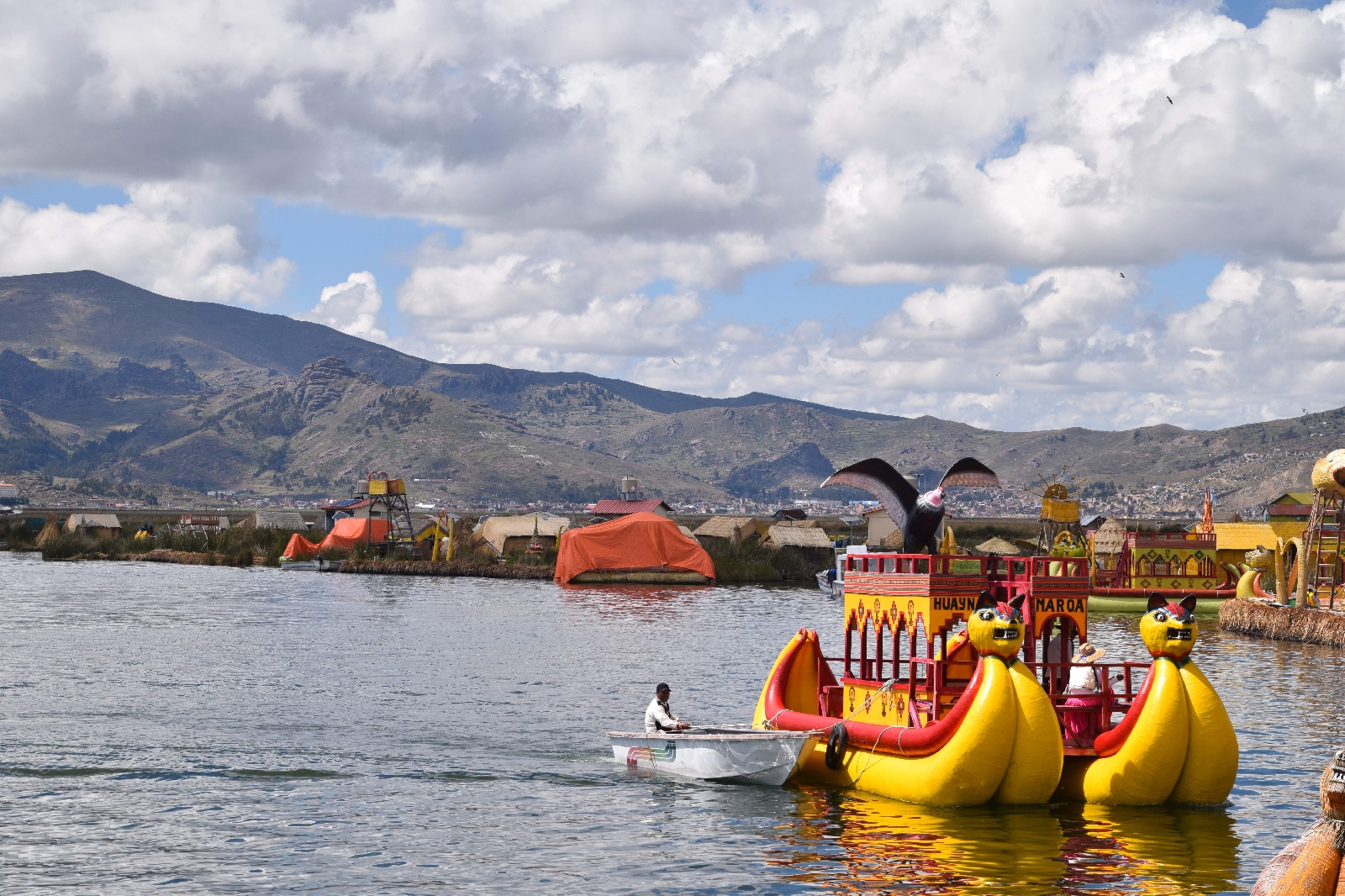
We were not 100% sure within ourselves about whether we should be visiting the Uros even if we did accept that we were Tourists and that was what Tourists did. When you arrive you are greeted by the inhabitants. There were plenty of people in Puno in what you would term, 'Peruvian dress'. Here, on the island, the colours were a tad brighter. The islands aren't big so it is only one tourist boat per island. Then there is the welcome song - not sure about this. You are shown inside a reed hut and can buy some souvenirs that are readily to hand and so cheap that they can't even have been made in China. You can then pay, we did, to go across the bay in a reed canoe (of sorts).


Our guide was very sincere but there were a number of questions that troubled us nonetheless. Did the people we met really stay on the island after we, the tourists had left in the afternoon? Did they really sleep four to the bed that occupied the vast majority of space in the hut or did they move to the more substantial constructions we saw on our way out there? They rely substantially on tourism. Would we as tourists have gone to see them if we knew that they really lived in the more substantially constructed shelters? If they really do live in the reed huts are we as tourists forcing them to do so? We remain troubled. It is certain that COVID hit them very hard and we were encouraged a number of times to spread the propaganda. We didn't ask the awkward questions to the guide. It didn't seem appropriate. What we didn't like was the welcome song and the extra boat ride. We had expected a small canoe not the equivalent of a double decker bus, of which ours seemed to be one of a 100 identical vessels, occasionally pushed by a motor boat. We also didn't like the children getting on this bus and singing to their captive audience and then asking for money. What we did like is then seeing the children spending any money they had gleaned from us on cakes. We also appreciated the historical and technical explanations of the islands. All we can do is wish the Uros people all the best. We have visited them, we have given them some money and we now have our opinions.
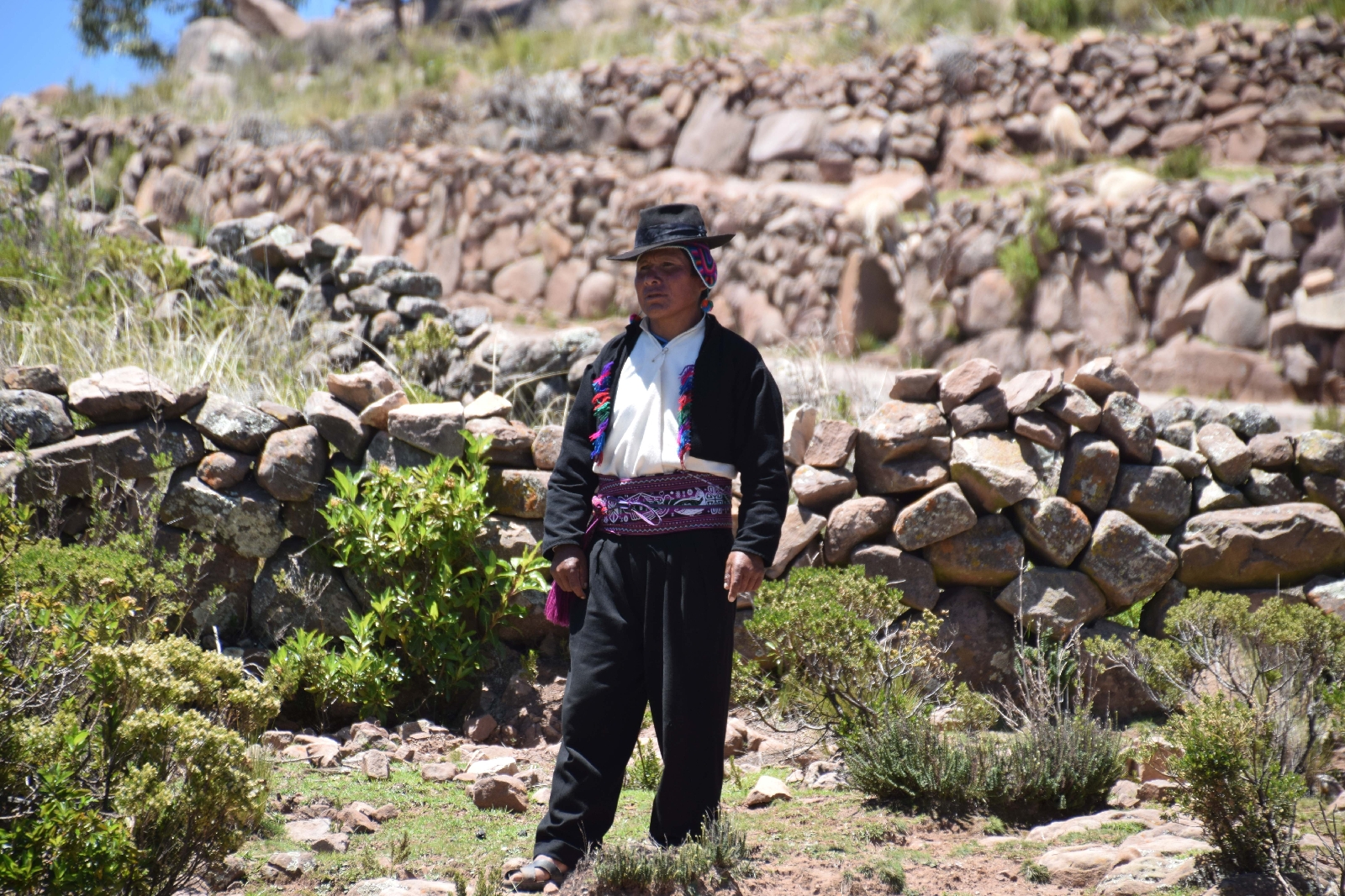
After the Uros we visited Taquile which is a real island about an hour and a half away on the tourist boat. Taquile is home to about 2,500 people who are fundamentally farmers with their income boosted by tourism. This felt more real. There had been investment in creating a path - there are no wheels on the island and also investment in six tourist restaurants in one of which we had lunch. Apart from the local dance that was put on for us we were OK with this part of the visit. We even wondered what it would have been like to spend a couple of nights there, but we did in the end catch the boat back to Puno.

Puno was lively. It was especially lively in the square behind our hotel and we didn't know why. We asked at the hotel and the response was  that it was the start of 'Candelaria' which is a celebration of Jesus being taken to the temple for the first time. We think it's a Puno thing; at least we think that Puno makes the biggest deal of it. Candelaria is actually at the beginning of February but they have to warm up for it and it just so happened that our first night in Puno coincided with the start of the warming up. The Candelaria itself in February seems to be a battle of the bands and dancers of 100 communities from around Puno. Its a BIG thing. The start of the Candelaria had a few of these bands and dancers showing off their moves. But also lots of people in their Sunday finery and loads and loads of people bringing baby Jesus dolls in cribs presumably to be blessed in the church - there was a queue to go into the church and everybody brought their dolls back out. We found this mix of Catholic Cristianity and local Peruvian custom very intriguing.

Monday, January 8, 2024

24. The spoils of War

We didn't get much sleep on New Year's Eve. The hostel as far as a room and facilities - even the shared bathroom - was fine, but you do have to put up with people who are perhaps not as considerate of others as you are. Or maybe we are too old for hostels. Telephone calls went on beyond the early morning. Somebody didn't get up for their 0500 trip to the geysers so the doorbell chimed a number of times etc. Not to mention the young couple next door who spend nearly all the time we were there testing the one piece of furniture in their room....

But we needed to set off whether we were bleary-eyed or not. We had met a couple in the hostel we stayed at in Santiago and they invited us to dinner if we ẃere ever passing by Antofagasta. So we decided to go that way.

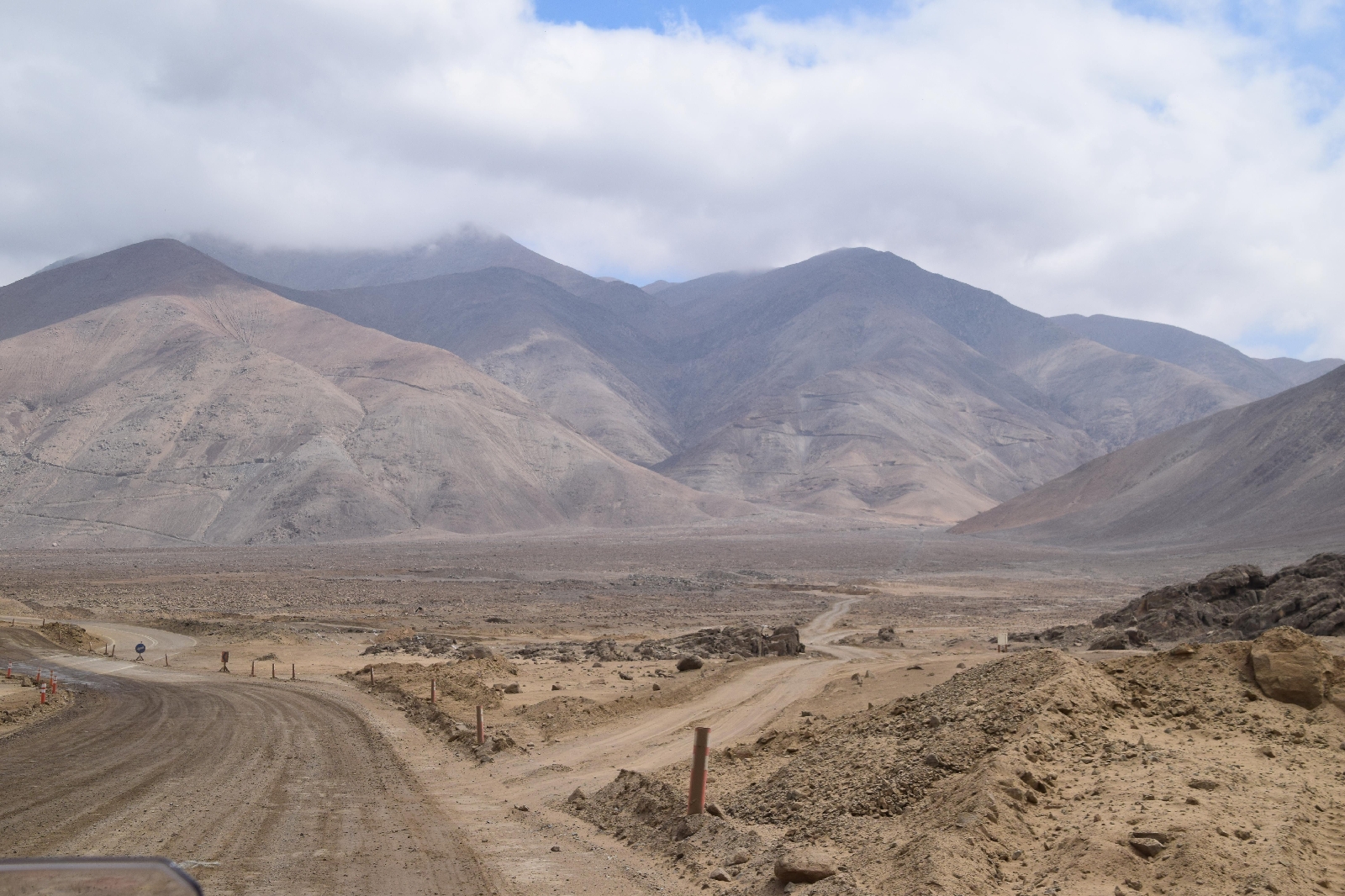
The road wasn't the most scenic but some parts were interesting. This is mining country. Not pithead and winding towers but moving mountains. We think the green stains on some of the mountains were copper.

This area was at the heart of the War of the Pacific at the end of the 19th Century. Bolivia had nitrate deposits. Chile didn't. But it was the Chileans who were working the mines. And then the Bolivians increased the taxes on the Chileans. So there was a war. And Peru was dragged in because they had a deal with Bolivia. Or something like that. Taking into account who was who at the end of the 19th Century, there was more than likely a UK role in this as far as ownership of the mines was concerned. Anyway Bolivia used to extend to the sea, which was very useful for shipping its minerals. Clearly they lost out to Chile as did Peru. Antofagasta where we were staying was Bolivian and has some Bolivian buildings still standing in the centre of town. What was the South of Peru is now the North of Chile. Of course mining is still big and Lithium is on the agenda now. And export routes are still needed. 

Jose and Ximena showed us round Antofagasta and its equivalent of Durdle Door - there was also the ruins of a Bolivian silver smelter and warehouse facility and we only wished our Spanish was better...


From Antofagasta we went to Iquique which also changed hands. It was quite a spectacular ride up the coast. There were ramshackle settlements everywhere. We really don't understand how they work, electricity, water, sanitation, waste wise. They looked very ramshackle. Tin, timber and tarpaulin lean-to's with not much to lean against. But there were what looked like new cars parked next to them. We stopped for a lunch of seafood empanadas and lemonade and met a really jolly Brazilian couple, Bolivar and Celia, who were going the other way on their bike.


We had thought that Iquique would just be a stopover. But it turned out to be a really nice beach resort. We would have liked to stay longer but had planned on getting to Peru. Whenever there is a border crossing, we try whenever possible to stay either side of it. No point in getting to a border crossing late in the day, far better to get there earlyish in the morning. And it's also better to not have to go too far afterwards in case you are held up at the border. So we planned on stopping in Arica on the Chile side of the border and Tacna on the Peruvians side. Arica was another of the spoils of war. We have this preconception, based on experience we must say, that border towns can be pretty grim places, but both Arica and Tacna were great. 


Our stop in Arica had great parking and Tacna was one of the most lively places at night we have come across on our travels. And it certainly had the best Christmas tree and Nativity. 


We had forgotten about border crossings simply because generally the Argentinian/Chilean ones had been so painless. This one was slightly more onerous in that there were long queues. So it took us two and a half hours to clear the border,  and that takes into account us using the motorbike to queue jump on a couple of times. Our luggage was also checked twice to no avail. We still have our coca for the high altitude bits of Peru! We also forgot the times may change at borders and we regained two of the two and a half hours we lost.


A strange thing we have seen on the road in Peru is vineyards in the desert with vines growing out of sand. We know the towns use water from desalination plants along the coast and maybe this is used for the vines too, Apparently Peruvian wine is a tad sweet. We haven't got to it yet, being a bit wary of altitude and alcohol. What is also strange is to come across oases. We stopped in one for lunch. Freshwater shrimp and rice  - both from outside the window of the restaurant.


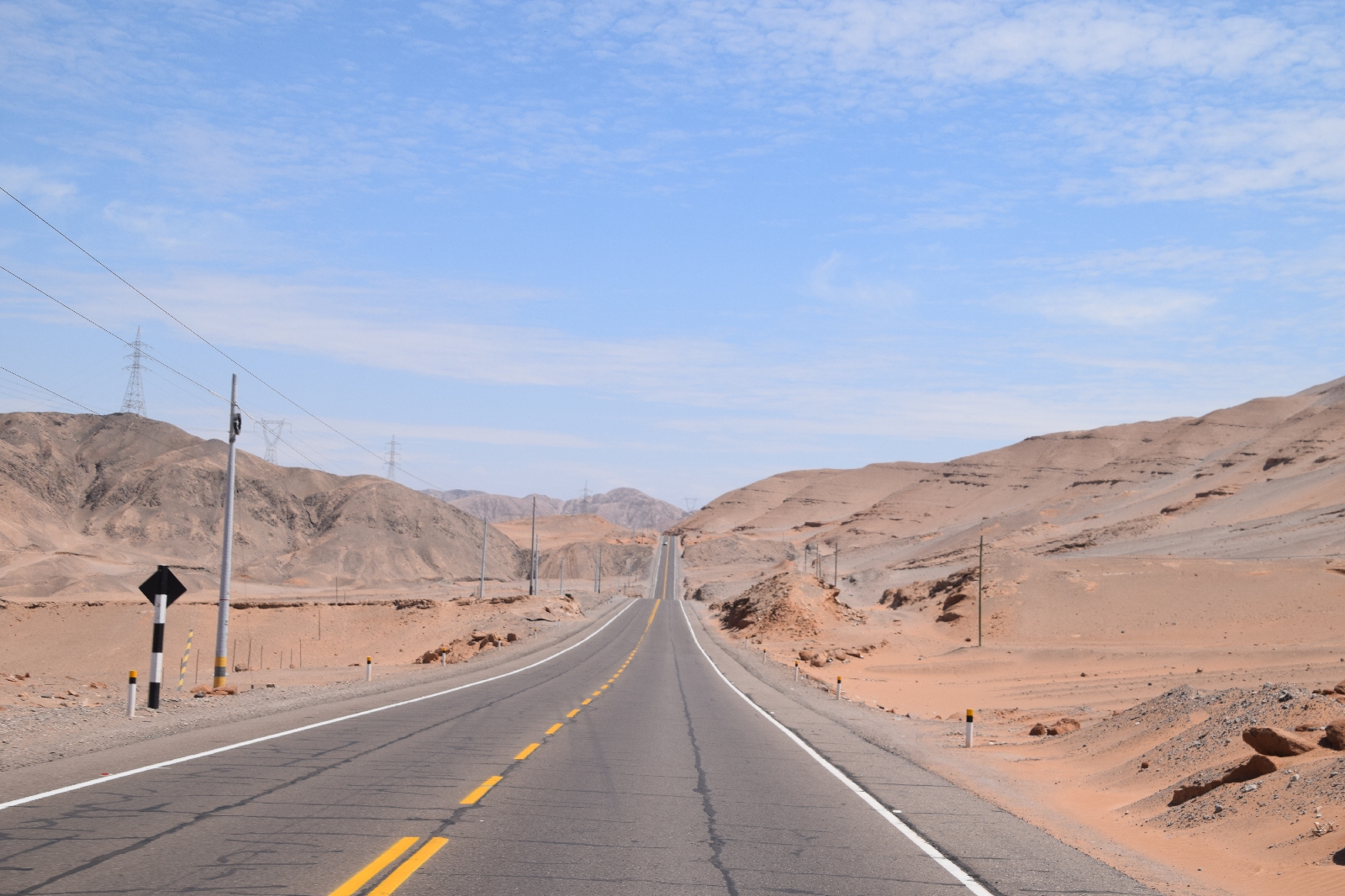
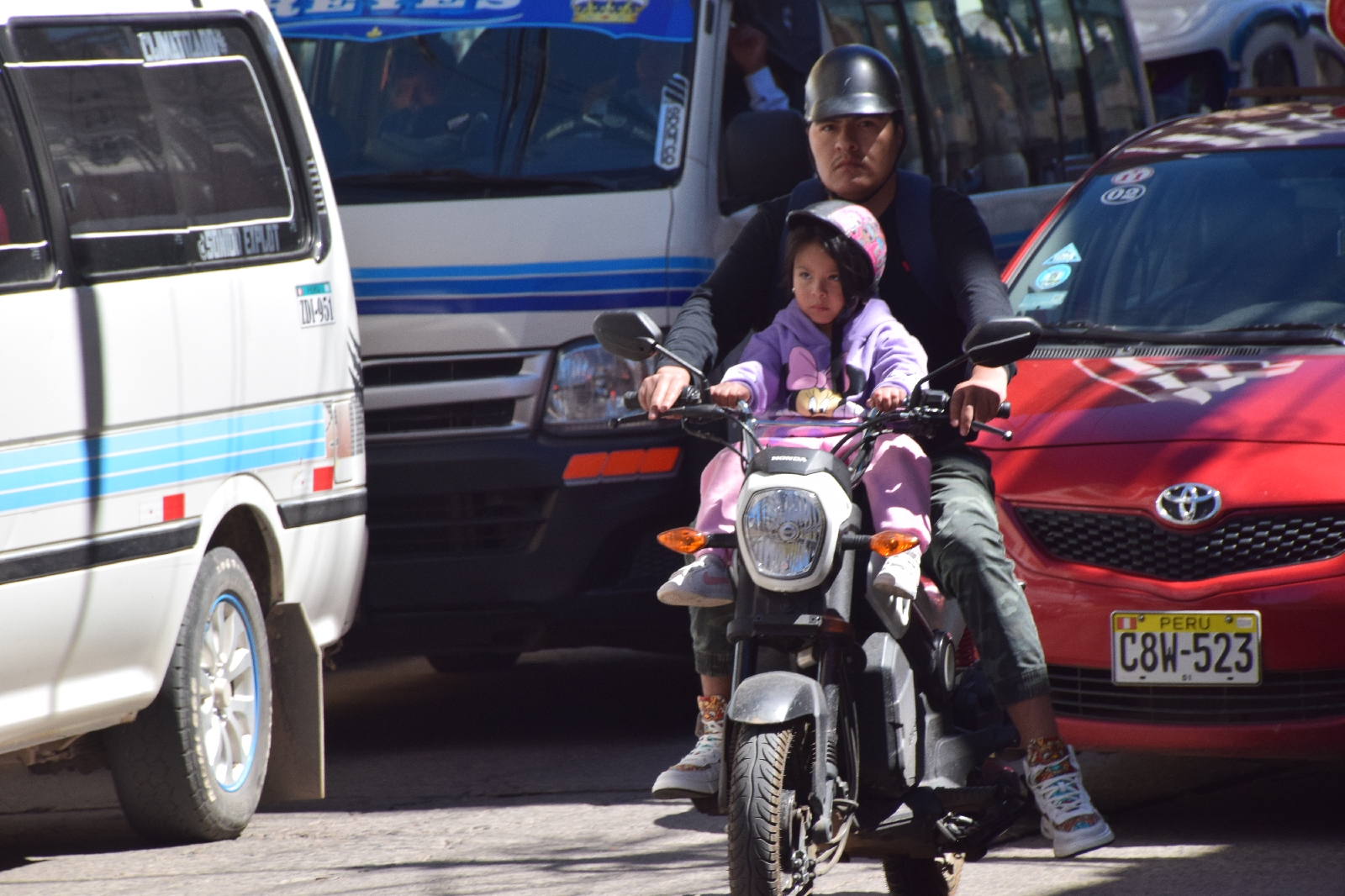
We are writing this bit from our stopover in Arequipa in Peru. It's quite chilly here but probably normal as we have moved up to 2,500m. Traffic on the roads in Peru is different. There are thousands of taxis in even the smallest of towns. The principal roads are dominated by very large, slow moving trucks, sometimes in convoy. The roads are single lane in either direction so it's quite difficult to proceed at a decent average speed. The motorbike does however help. Apparently there were things to see and do in Arequipa but we missed them.


We did come across a fatal accident about ten vehicles in front of us. A small bike and the rider was clearly dead. Not sure what happened. There was a large piece of wood in the road. Whether he hit or dropped it or it hit him we will never know. His helmet was some 10m away from the body as was one of his flipflops. What was shocking was the amount of people, stuck in the queues that quickly built up either side of the incident, that had gotten out of their cars and buses to go and have a look and get a selfie before somebody covered the body with a rug. The bike and body were strewn across the road but we could squeeze by. We weren't going to help the situation by staying there. We know we need to be careful, and we think we are being so, but this was nonetheless a reminder.

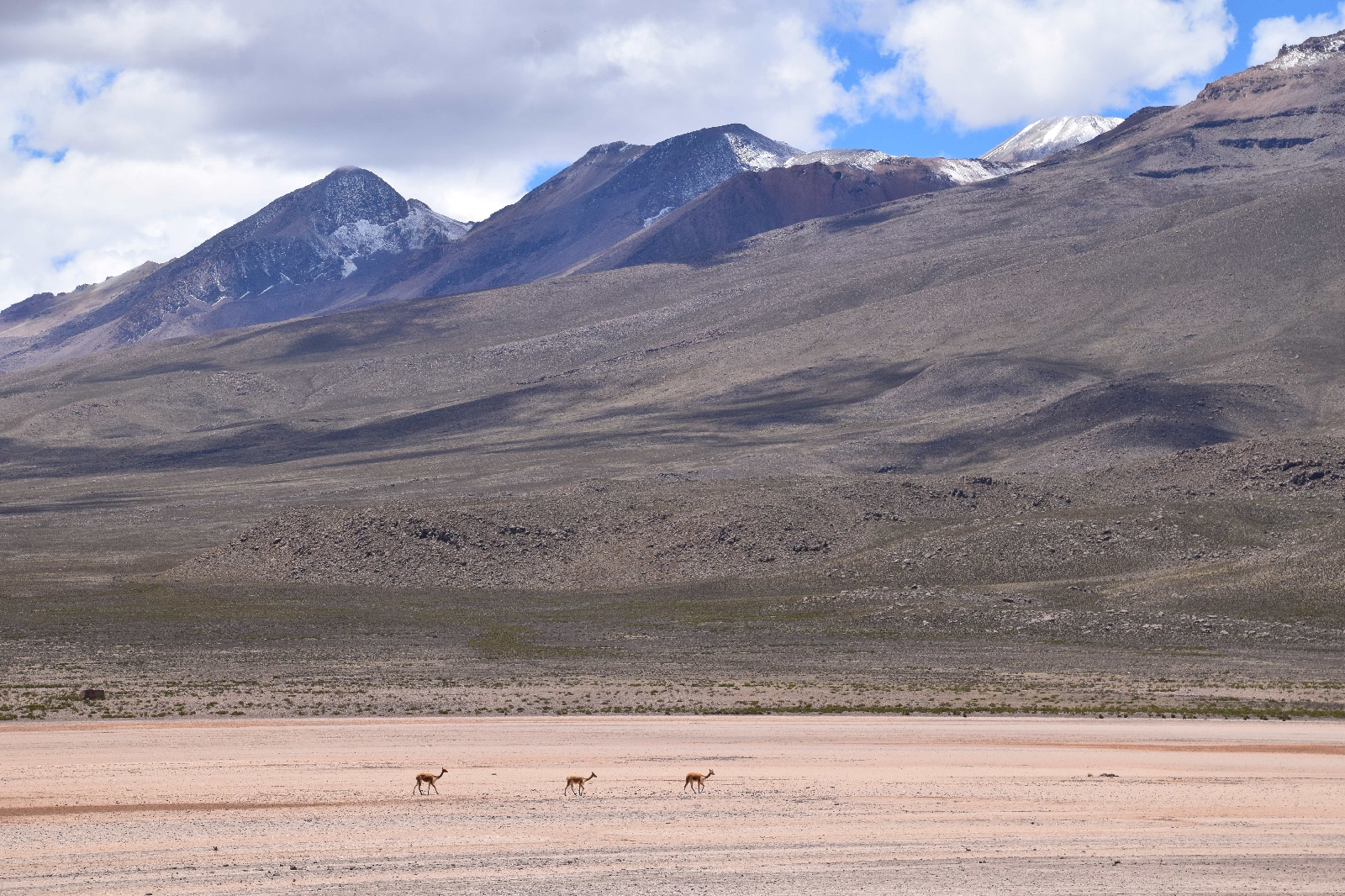
The following day was about getting to Puno on the shore of Lake Titicaca. There was a direct road from Tacna to Puno, but we weren't sure about the condition of a section of it and we spent an extra day going a longer way round. We keep telling ourselves that our adventure is about doing the trip and, hopefully, getting to somewhere that satisfies us as an 'end'. It's not about taking unnecessary risks along the way - something that was reinforced the other day. Getting out of Arequipa was very hard work indeed aswell as time consuming. It wasn't the taxis or lorries this time but the buses. The small white ones that ply a route but that seem to be able to stop wherever you want. Of course the lorries and taxis were also thrown into the mix resulting in us overheating and also a fear that the bike would do the same. The condition and narrow width of the road plus the mass of traffic in the opposite direction didn't permit overtaking. However we did manage to get some clear space eventually and spent the vast majority of the ride over 4,000m. We need to set off earlier next time we have a big ride and need to get out of a town.

We have often said that we prefer to have stopovers outside of big towns rather than within, but there is little choice of stopovers. Whereas finding accommodation is still a priority, petrol seems to be easier. However we were quite shocked by the price of petrol in Peru until we realised that they were displaying the price per gallon as opposed to per litre.

Thursday, January 4, 2024

23.0 New Year desert

Cake? Albeit a tad salty...

Having spent Christmas in the greenery of Iguazu we decided to spend New Year in the Atacama desert. And  rather than fly there, we rode.


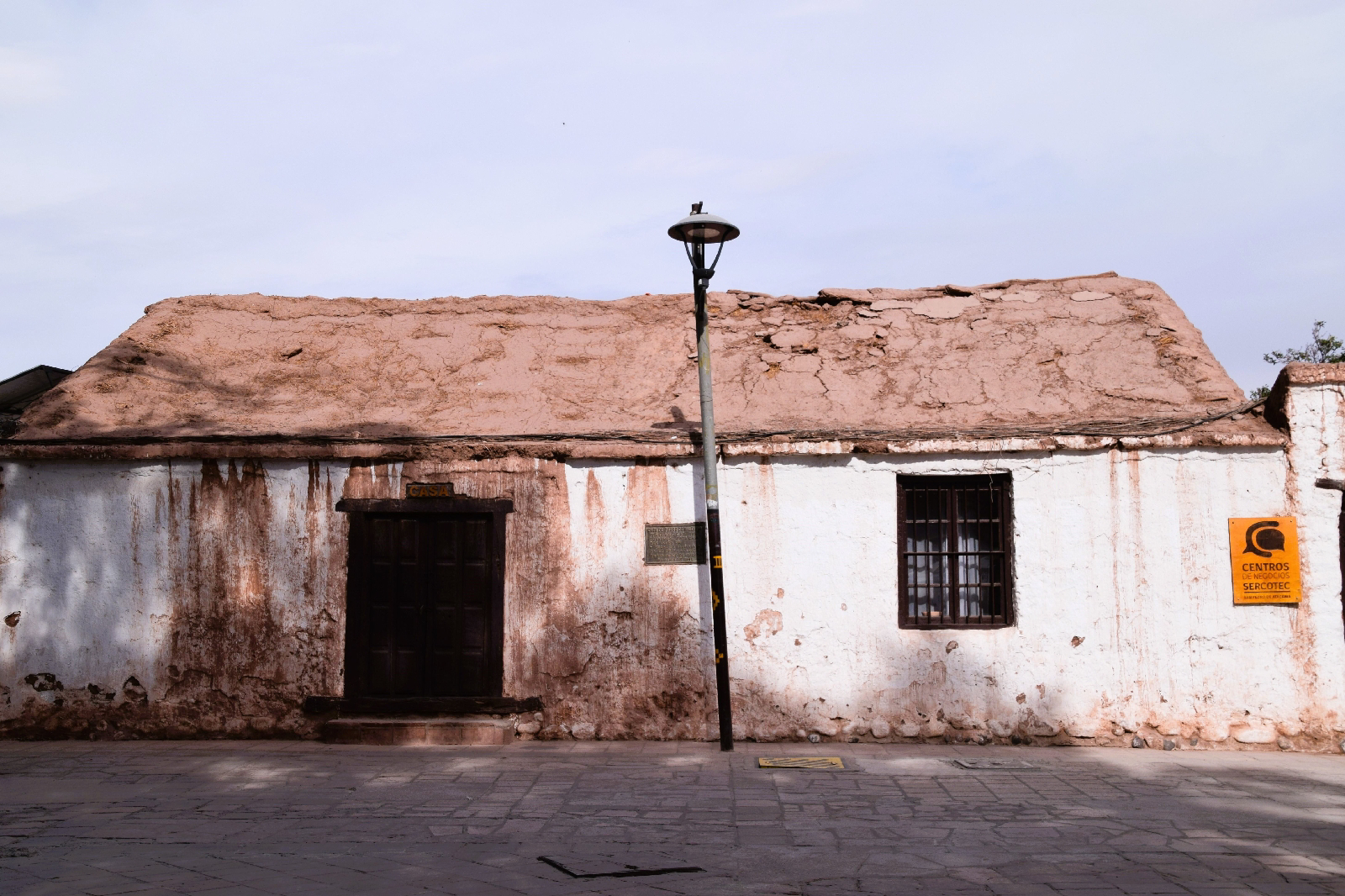
The town of San Pedro de Atacama is a tourist town albeit with adobe brick buildings and dusty unmade streets. You come here not for the town itself, but to take tours from here to see things. So that's what we did.

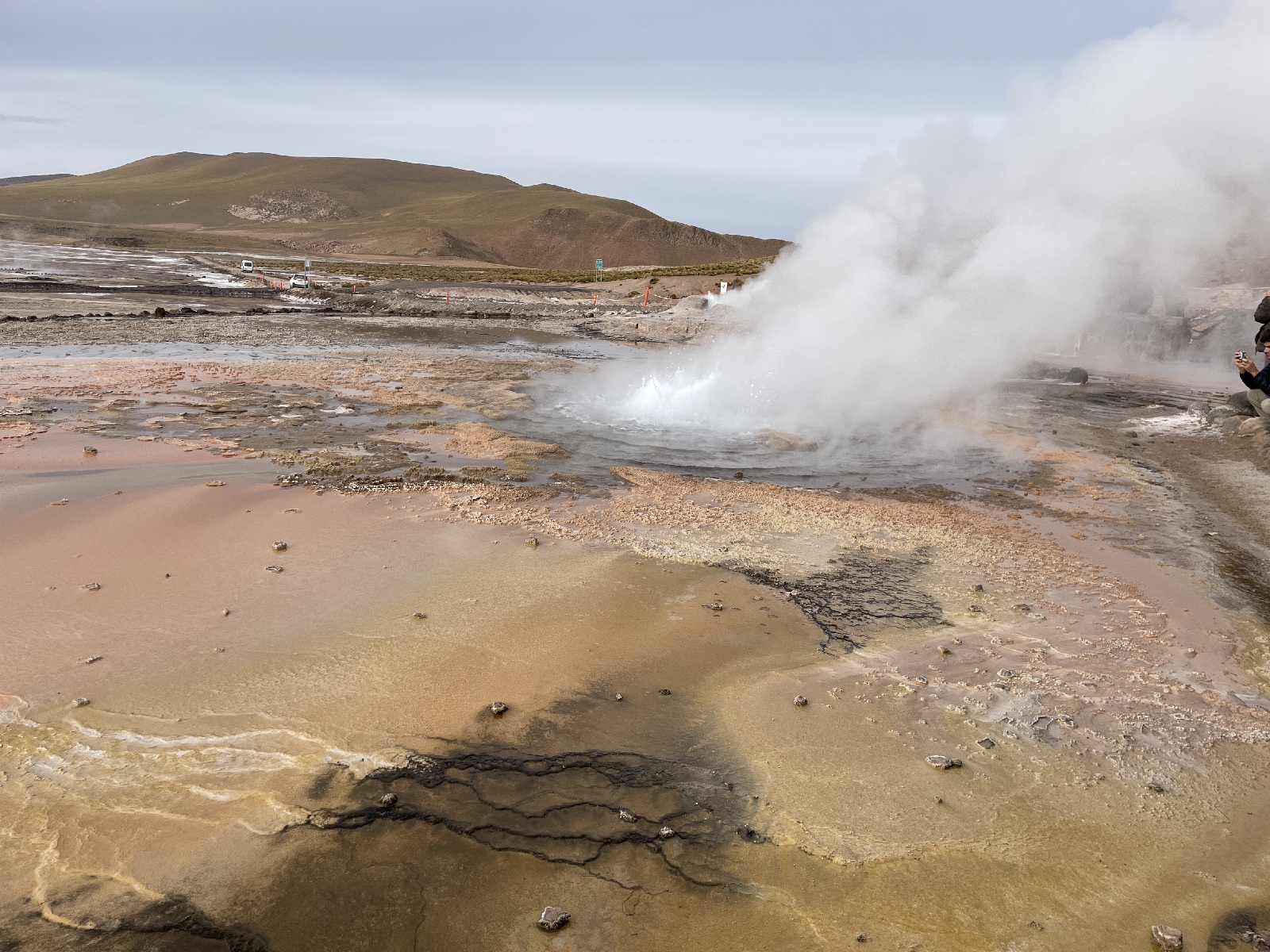
First visit was the El Tatio geysers. One of the biggest geyser fields in the world apparently. Not geysers that shoot skywards, but ones that just bubble away,  sometimes stopping as they block up and then reappear in a different spot. The crust that you walk on is supposedly quite thin and walkways are clearly indicated. There have been casualties in recent years according to our guide. The water that bubbles up is said to be at 85°C, so not quite enough for a good  cup of tea.


Of course the Atacama is quite hot. It's a desert after all. And to see steam you really need it to be cold which isn't going to happen mid-afternoon in the desert. So you need to see it just before sunrise as that's the coldest part of the day. Which meant setting the alarm for 0430...

Of course the geysers weren't located next to a main road or vice versa. So there was a long bumpy road on gravel and corrugated rock to get there, but there was also a lagoon full of strutting flamingoes on the way back. 'Flamand rose' in French, which Paul thought was a way of describing a gay Belgian.

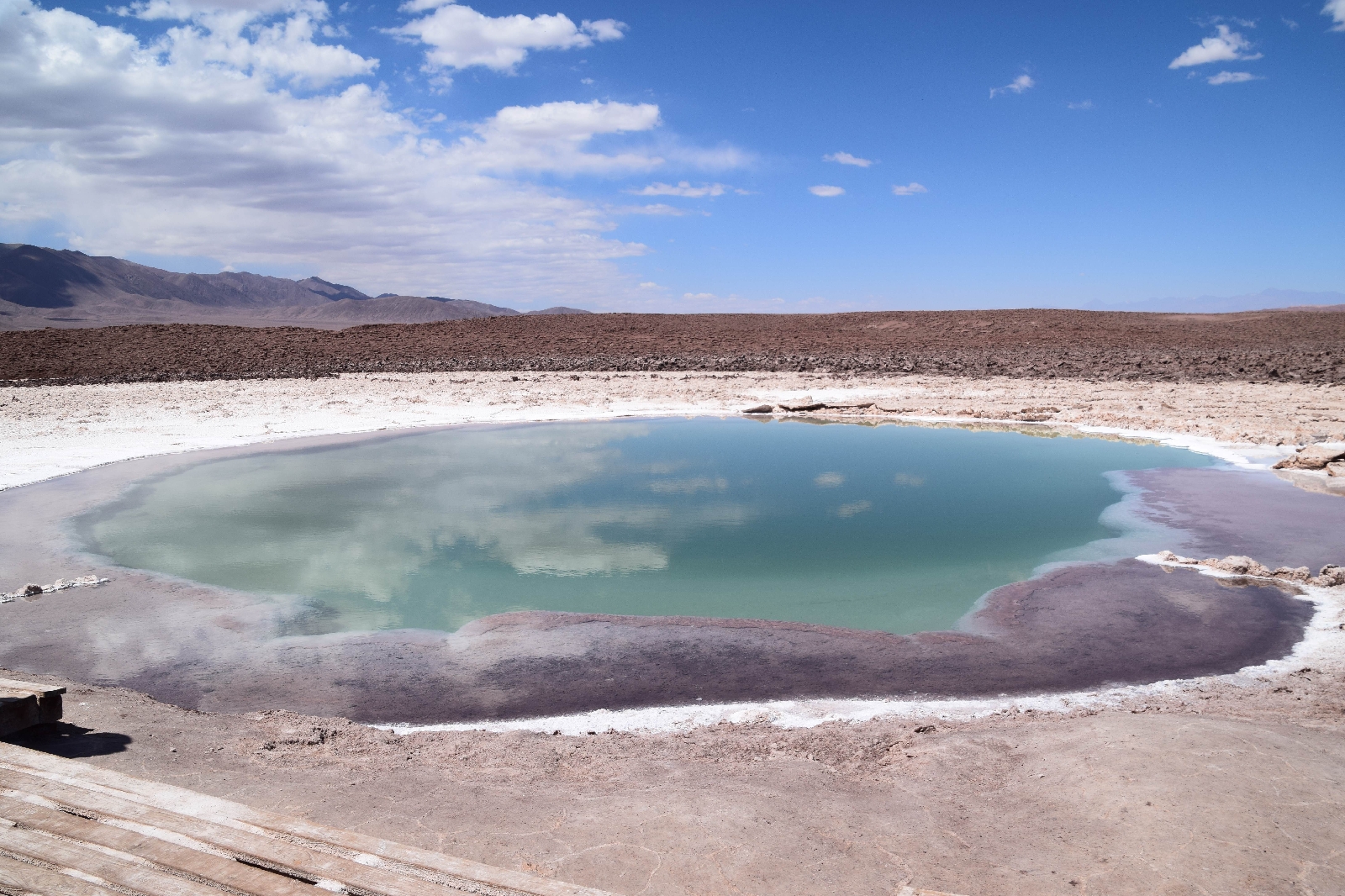
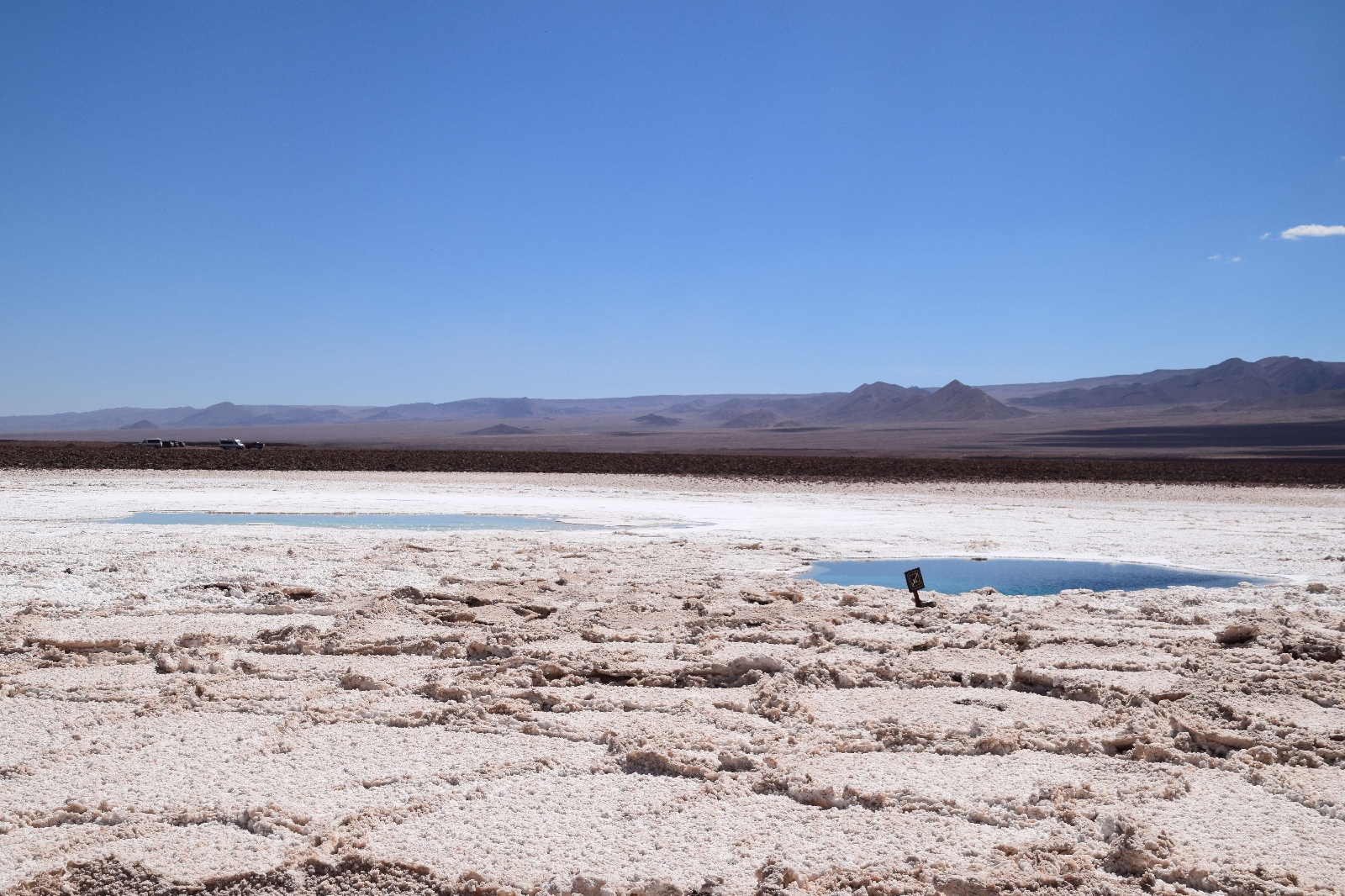
Our other trip was on New Year's Eve and in the future we will probably say to ourselves, 'Do you remember what we were doing...?' Well we were floating in a salt lagoon in the middle of the desert. 


San Pedro was party town in the evening. Effigies bring burned to get rid of the worst of the past year sort of thing. And we felt our age in the hostel...

We have been very preoccupied with things recently and that has probably impacted on our blogging. Francoise's mum was taken ill again just before Christmas and spent Christmas in hospital. She was released into palliative care on Boxing Day and passed away on the 3rd January. Francoise has been assisting with the funeral arrangements from afar. It has not been easy. Life is a journey and one day it comes to an end. R.I.P.


78.0 Over and out.

Eleven months might be up, but our card for the USA National Parks is still valid and the USA was just across the border. So we took another...