Wednesday, March 6, 2024

36.0 Sign of the times

The scenery hasn't always been easy for photographs in Colombia. It is often hazy and the traffic can be too challenging for us to slow down, let alone stop. Francoise also says that there are too often things in the way be they trees, armco barriers, whatever.


It was much of the same as we headed south from Mompox towards Bucaramanga which was just going to be a stopover - no plans to go and see anything there when we arrived. However immediately next to our accommodation was a little park with the ever more ubiquitous Botero sculpture. This one had a little plaque saying it had visited Milan and St Tropez. However it didn't say why the sculpture had been evicted from these two homes.

With not much to photograph scenery wise Françoise busied herself with other things. In the UK there are those road signs warning you of imminent danger, as a deer with massive antlers is about to jump out at you without warning. It's similar here in Colombia. We have been warned about anteaters, armadillos, monkeys, crocodiles/alligators/cayman, turtles/terrapins, foxes, other rodent like creatures, iguanas, snakes, sloths and others. And we were about to say that, just like our experience in the UK where we had never seen any sort of deer jump out at us, we had a large iguana crossing the road that wanted to get to the fence post on the other side.

Our next touristic stopover was Villa de Leyva. This small colonial town has a wonderful cobbled plaza and  everything is pretty original. The architecture around the plaza is also interesting with perpendicular roads running off from each corner, again all pretty and well preserved. The cobbles are unworked stones and it is pretty hard to walk on them without turning an ankle. But the most incredible part of this small town plaza is its size; at 14,000m2, or 120m x 120m, it is the 4th biggest square in South America and bigger than London's biggest square, Trafalgar Square. Apparently the town was built to keep retired Spanish soldiers happy and the plaza was so grand for military reasons. It was very quiet when we were there; no problems finding a hotel, or anywhere to eat. The hotel told us it was a totally different story at weekends and Christmas/New Year as the town was a romantic getaway for Bogotanos. Oh, and there just happened to be a parrot sat on a fence on the way to the plaza...


Our last stop before Bogota, from where we would be leaving Colombia, was Zipaquira. We visited an ex salt mine here. What was amazing is that an underground cathedral has been built in the salt mine. It is 200m underground. Not a small, token Cathedral but a full blown one that has been carved out of the rock like some sort of negative building process. It even had salt crystal chandeliers! It was truly magnificent as a sacred place, architecturally, artistically and engineering wise. We visited the cathedral on our own and not part of any organised tour; there were things we didn't understand due to our insufficient Spanish about this cathedral actually being situated 60m below another underground cathedral built in the 1950's that had to be closed for safety reasons.

Onwards to Bogota...


Tuesday, March 5, 2024

35.0 Cartagena de Indias... and Santa Cruz de Mompox


Cartagena de Indias, or just Cartagena, was the Spanish outpost for shipping gold and silver back to Spain. They were so engrossed in the activity that they forgot to strengthen the fortifications. And along came Francis Drake...


We came here to recover a bit from sunburn. Wonder what that was due to?
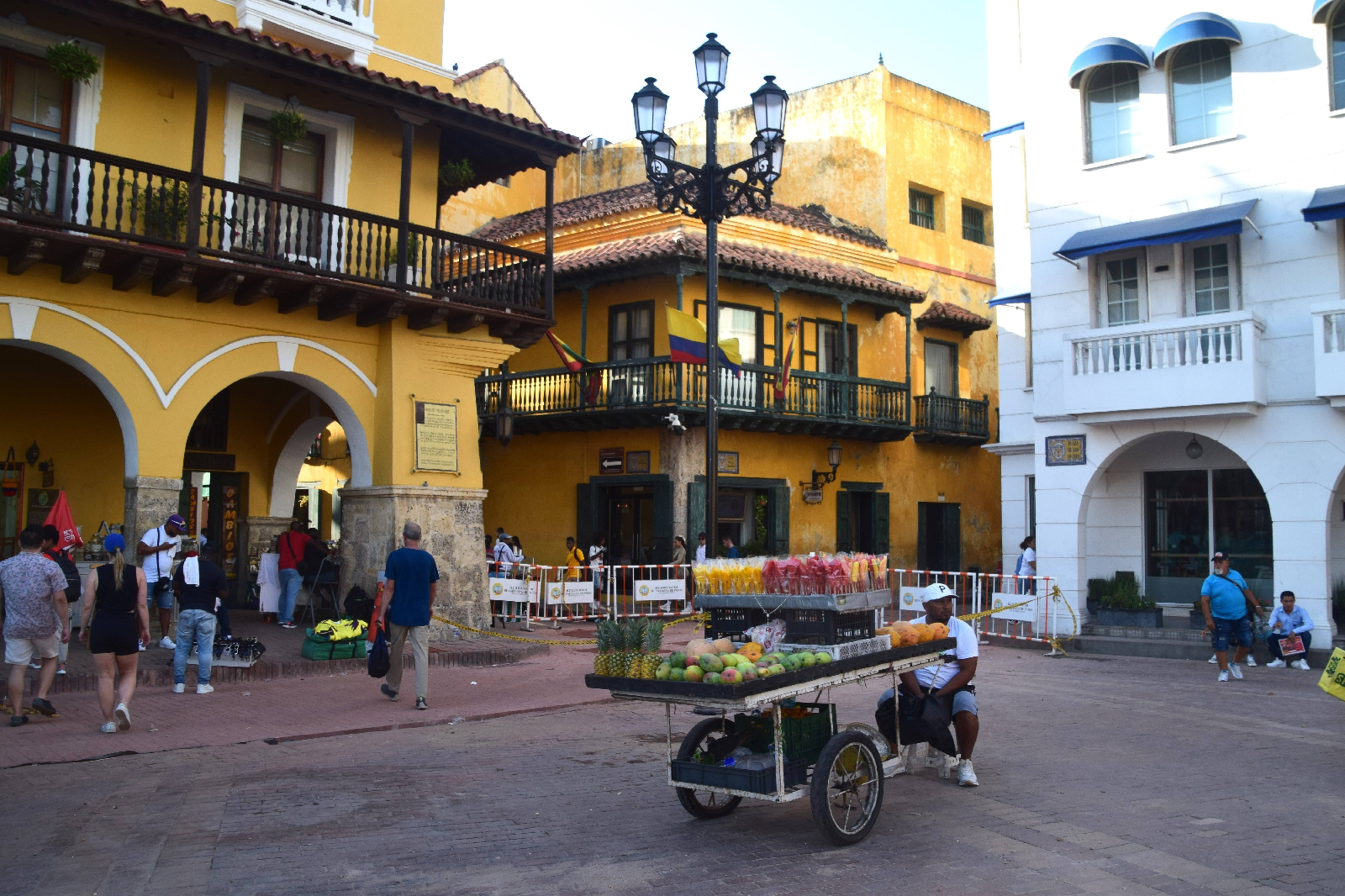
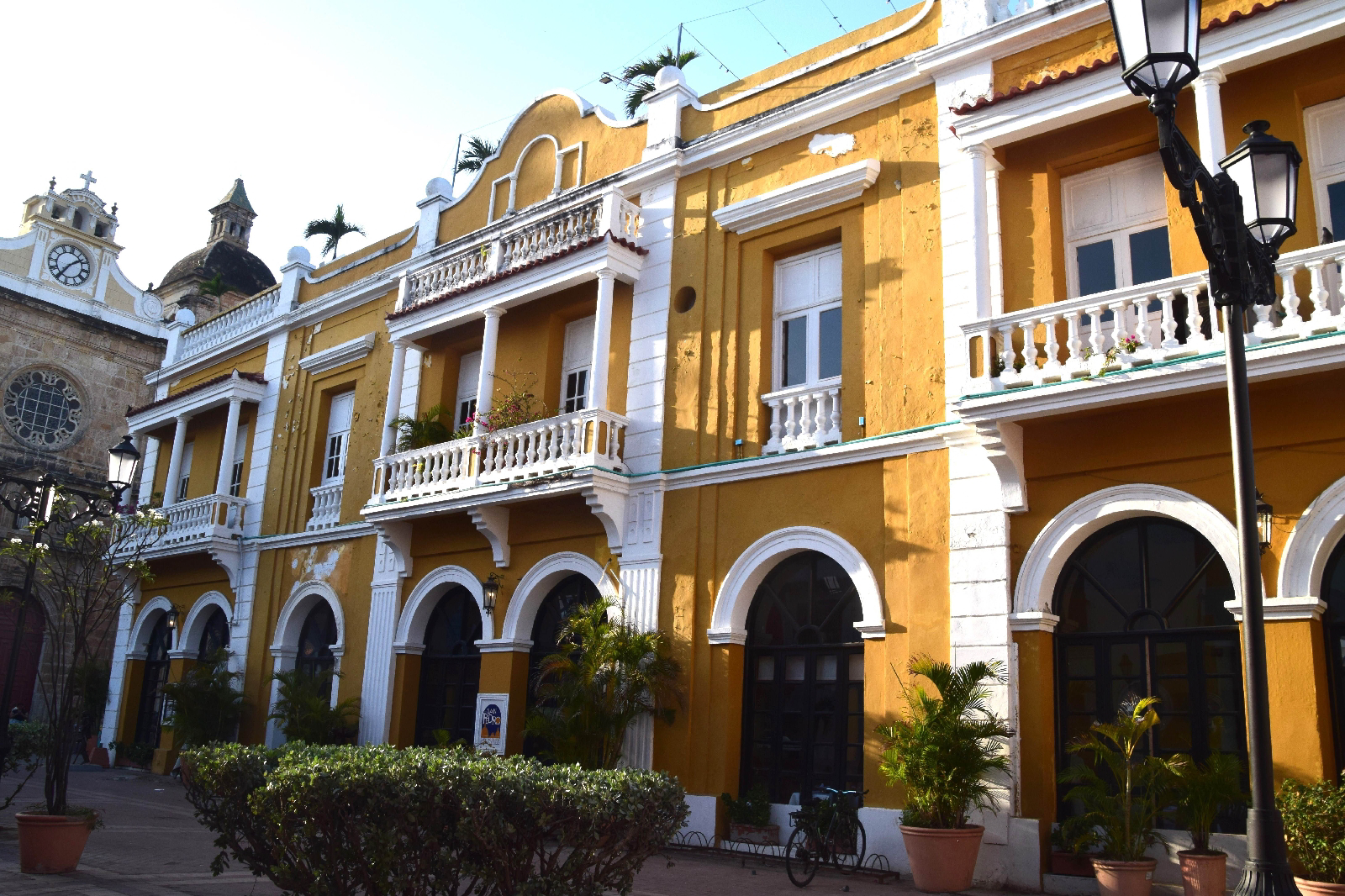
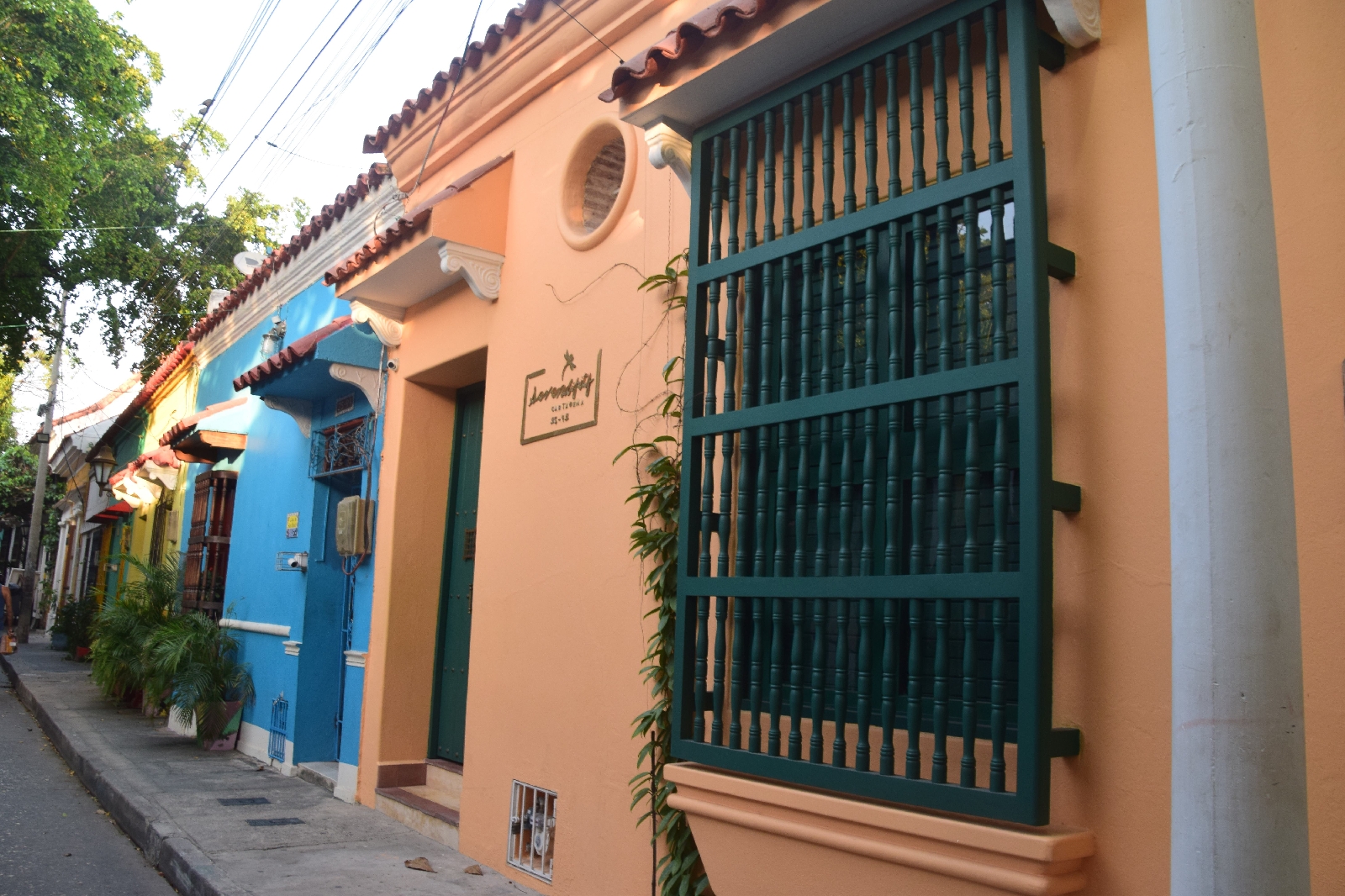
Cartagena is a big sprawling city nowadays. It is a series of islands linked together and as is often the case globally with these historic places, it is in the process of gentrification. Do the tourists who flock here want the bars, restaurants and coffee shops or do they want to walk around and see people living in their homes in what some people would describe as a zoo? And let's not mention AirBnB. Gentrification is cleary happening and our City walking tour guide, yes another one, confirmed this. But we did enjoy our juice and also our coffee and cake and evening meal at restaurants in the historic centre. And the liquids were very necessary as it's very hot and humid here. 


We walked around the historic centre in the evening as well, not making eye contact with the improvising street rappers who work in threes - beware of the two not rapping said the guide. Low level policing again, nothing like Buenos Aires or Cusco. According to our guide the police and military were deployed elsewhere in the country. There was also a lot less homeless in the streets here but there will be other areas of Cartagena where it might be different. There are lots of plazas in the historic centre of Cartagena and everyone had a dance troupe doing its thing. Very nightlife place. The plazas also had their obligatory churches. Equally obligatory is the Botero sculpture,  donated by the artist (again), of a nude reclining woman in front of the doors to one of those obligatory churches.

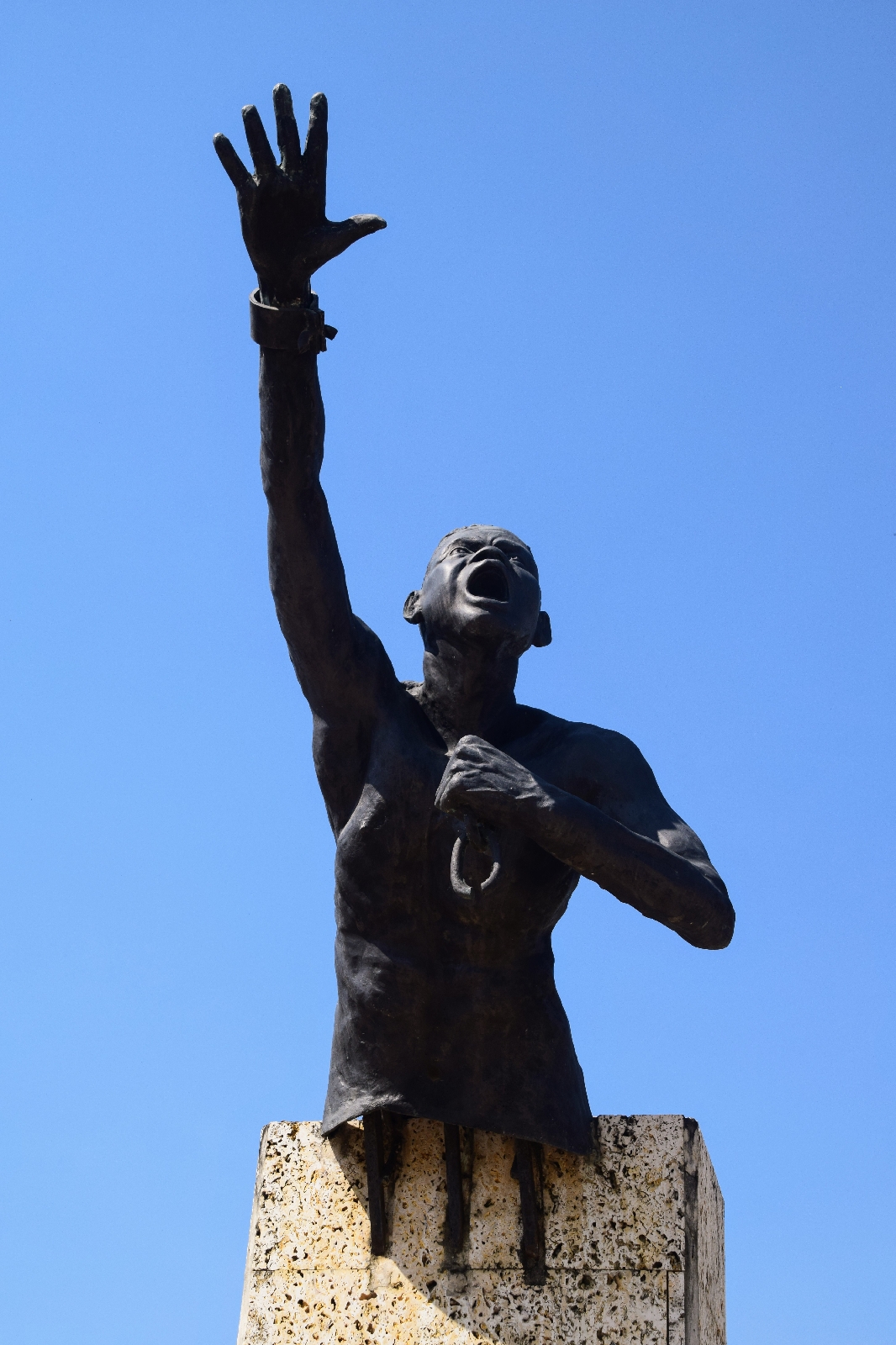
Colombia is racially a mixing pot. There were the indigenous people. Then the Spaniards arrived. And they brought African slaves with them. And everything since then has got mixed up. One of the stories we found really interesting was that of slaves who escaped Cartagena in the early 17th Century. They moved about 50km inland where they could not be found. Women slaves braided their hair in a way that could be used to both communicate directions and hide seeds for future use. The community they formed, San Basilio de Palenque, became the first free African town in the Americas. The pueblo exists today and has maintained its community. It's definitely an important story; we visited Palenque but unfortunately the story is not well told in-situ. One wonders what would happen if the investment was put in to tell the story properly, would that eventually lead to gentrification of the village and the death of the community?
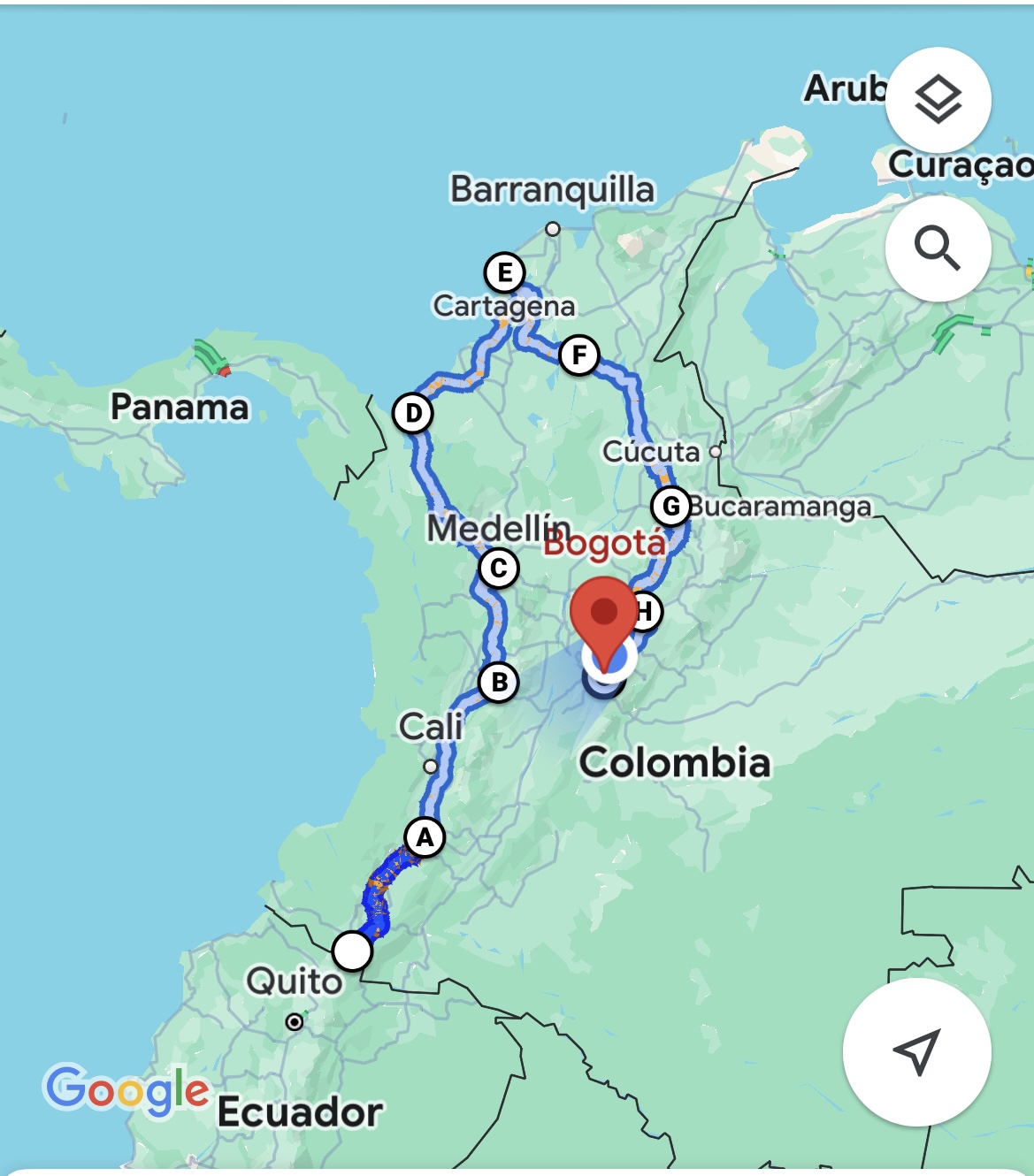
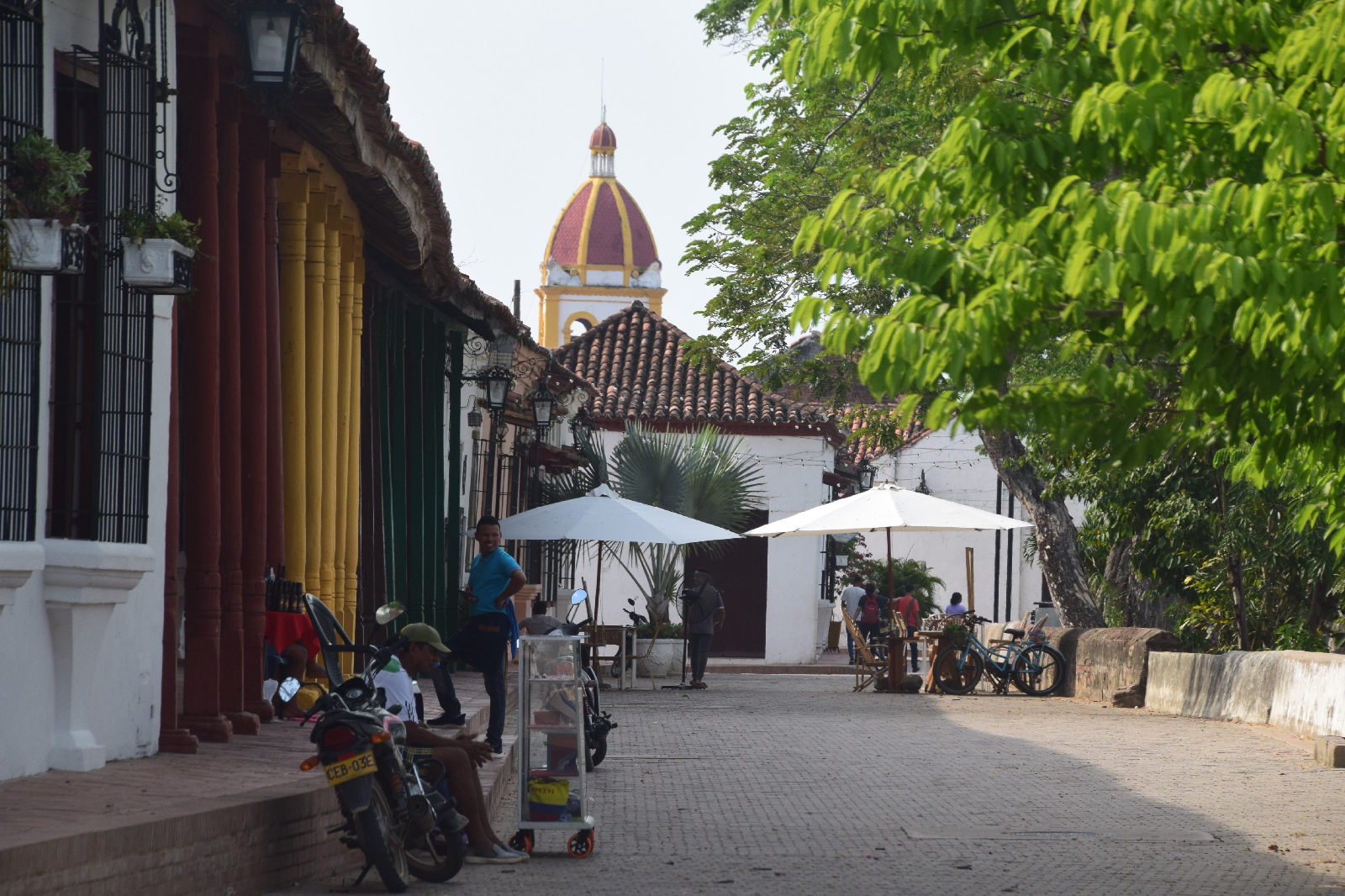
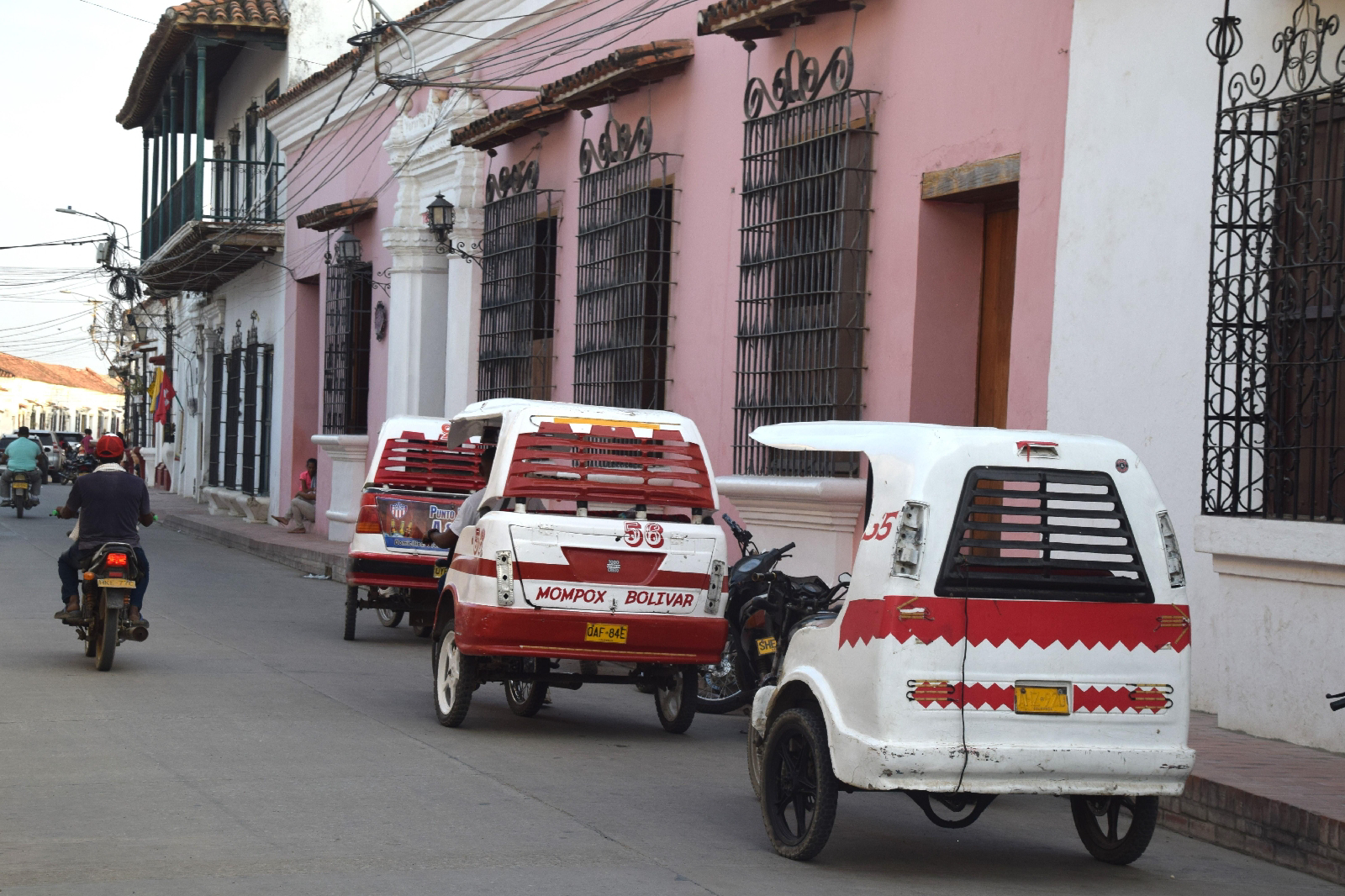
To fly to Panama we need to get to Bogota. Our mantra has to change - we now need to head South. First stop was Santa Cruz de Mompox which is a small, forgotten, inland town that was an important river port for the development of the interior of Colombia by the Spaniards. It was forgotten first by the river itself, which changed direction and then silted up locally. But all the colonial houses had been built by then and still exist today, almost en-masse with the only sign of modernity being the electric meters attached to the facades. In the colonial times the town was full of smiths; black, gold and silver. All the houses, which although they are only single storey,  albeit a high storey which probably helps with the heat, have wrought iron railings to the windows, magnificent doors, and lots of bentwood and wicker furniture inside. The windows behind the railings are all open;  there were jewelry workshops in many of the houses maintaining the gold and silversmith traditions. 


The town is also famous for its Holy Week celebrations, a bit like Popayan was. Practice was underway. Colombia is an extremely Catholic country and religious tourism is a big thing. The hotels are full for a couple of weeks and then, they are pretty good value when they are not, as we found out! We benefited with some pretty decent accommodation - it was ridiculously hot when we arrived, 38° but feeling like 41° due to the humidity. At least the washing dries quickly...


Saturday, March 2, 2024

34.0 Getting caught in the rain

We moaned about the lack of hot water in the showers in Peru when it was cold. Not so much now! We are heading towards Cartagena which will be our most northerly point in South America. It isn't the most northerly point of South America but we are running out of time to hunt that out. It's also a desert at the very north and we are hot and dry enough as it is. We have just about fixed the date for shipping the bike to Panama and we have bought our own tickets - it will be our debut in Central America. 

We went against FCO advice leaving Medellin and crossed into the FCO Orange, as opposed to the 'Green is OK', zone. No particular reason but that's where the route we chose took us. Well it was recommended to us by Albert, a Scottish biker who had been living in Latin America for the past 26 years.  Françoise wanted a palm fringed beach. We couldn't get there in one hit, so dropping a pin on the map at roughly the right sort of distance we left Medellin and ended up in Dabeiba. And there was a fair old racket going on when we got there! So we wandered across the road from the accommodation to one of the liveliest bars, sipped our Coronas from the bottle, (it wasn't the sort of place to ask for a glass) with all the blokes wearing their hats with their shawls over their shoulders. And there is no cigarette smoking ban here yet. The bar was busy and the tables were pretty loaded with bottles both empty and full. There was an open urinal at the end of the bar. Paul tries, and fails, to wear his Panama all the time, especially inside; he says it's just too hot!


Music was blaring out onto the street, not just from the bar where we were, but from every bar in town and we are not talking about American/UK chart successes, recent or old, dubbed or original. This was Colombian something or other. There was also the loudspeaker blaring out about buying lottery tickets, the smoke from the food vendors as they prepared their meat skewers, the supermarkets with their sacks of beans spilling out onto the street, the many different types of banana lookalikes onsale and the kids doing wheelies along the main street on their motorbikes. This really felt like South America. More music started after we had gone to bed and continued until 04.00 in the morning. Over our breakfast of eggs, arepa, plantain and rice and beans we asked the hotel staff if it had been a special holiday? Indeed so they said. It was a Sunday...

  
Onwards to the coast and we hit a little offshoot of the Caribbean at Necocli where we stayed 10m from the ocean in a beach chalet - one of only six at the place  - an Albert recommendation. Thank you Albert. And the sea was substantially warmer than showers we had in some of the accommodation in Peru - yes, it has marked us. The plus side of limiting our daily mileage because of the heat is that we can get to places early enough to have a few hours to do something. In this case bath in the Caribbean... The accommodation was also home to five dogs, a couple of cats, hens and we even saw a couple of red squirrels in the trees. Not sure how they get on with the coconuts?

Necocli was a palm-fringed beach on the Caribbean but Françoise wasn't satisfied. She added 'remote island, preferably coral' to the specification. So we ended up in Tolu which was a funny scruffy little seaside town. However in the mornings, boats left from Tolu to the Parque Nacional Natural Islas Corales del Rosario y San Bernardo. And one of the islands was called Isla Tintipan, which almost sounded as though it could be Belgian. Another Albert recommendation.

So at 0830 we waded out to the boat. There was no quay or jetty in the Tolu  'puerto'. And after an hour and a bit on the boat, having sailed past a few isolated coral islands, we were dropped off at a private sort of beach with 20 other people and spent the rest of the morning there with lunch being served. Mad dogs and Englishmen? We were scorched and singed.


But, 'If you like Pina Coladas, and gettin' caught in the rain'...


78.0 Over and out.

Eleven months might be up, but our card for the USA National Parks is still valid and the USA was just across the border. So we took another...