We have mentioned previously that our four distinct seasons are not replicated here. A lot of our planning was based on weather data on the premise that if we went South to North at a certain average speed and started in October, we would be likely to hit a lot less rain along the way than other options we had looked at. And so it has proved so far with us having very little rain at all. There were two realistic options of crossing into Nicaragua from Costa Rica, one major border crossing on the PanAmerica highway and a quieter one in the middle of nowhere. We chose the latter on the basis that it would be less chaotic and potentially quicker at the crossing itself - which was going to be important for us in the 35°C temperature and high humidity.
To get to the border we stopped in the totally unremarkable Los Chiles where we felt that we were the only foreigners in town. We got that one totally wrong. Our accommodation was totally adequate and we felt at one with the world when we retired for the night. There was a bit of noise during the night and we thought that it must have been some late arrivals. At about 0530 it started raining, the Cambodian type of rain. Paul had cold feet and got out of bed at about 0600. His feet were cold and wet. Water was pouring in through the ceiling light fitting onto the bed and the floor of the room. Rain was upon us! Some of our clothes and gear left on the floor were in the process of getting wet. Lesson learned. It was not the time for a lie-in so we started mopping up, moving the bed and getting a bucket under the drip. We then found that we were not the only ones staying at the accommodation and indeed people had moved in during the night. We were not the only foreigners either as there was a group of Afghans, a group of Chinese, a group of Lebanese, a family from somewhere else in Latin America and three Africans who might have just been sheltering under a roof or might have had a room, we don't know. Everybody was washing their clothes and getting them dried - we managed a 5 minute jump-the-queue slot on the drier.
They were all refugees of one sort. We do not really understand how it all works. Do they have money to stay in accommodation? Do they go to the legal border crossing like us? As long as they have passports and the bit of money required to exit and enter, why not? But there were very few at the border. Los Chiles was 6km from the actual border. There were a large number of families camping under the eaves of a supermarket, some with tents, others without. Heart-breaking. Presumably they are all heading North for the USA?
The border crossing was tedious because of the burocracy; queue up at window one to get a paper that had to be signed at window two, but not before you have paid for something at the Caja and got a stamp on the piece of paper etc. It's just like that; frustrating but we suppose it keeps people in jobs. It took us 2hrs 40minutes to clear the border, which others are keen to say is nothing compared to their ordeal.
Rain was on and off throughout our border visit and we got to our accommodation in Nicaragua, thankfully without having to put our rain gear on. The town where we were staying is described as having a 'sultry last outpost feel'. Agreed. The accommodation was very basic. We endeavoured to get out quickly in the morning. Lake Nicaragua is enormous. The town we were staying at, San Carlos, is located on the lake and also on a river that leads from the lake to the Caribbean. Historically it was therefore quite significant both for the conquistadors and the pirates. An alternative to the Panama Canal was also considered along this route by the Americans, but never built.
We had a long ride around the lake to Granada, another Latin American city with a Spanish namesake. Scenery wise there was not much going on. The road was in excellent condition and used most by real cowboys; the ones we had hoped to see in Argentina. The rainy season is approaching, but not yet here and the cows really looked as if they needed to feed.
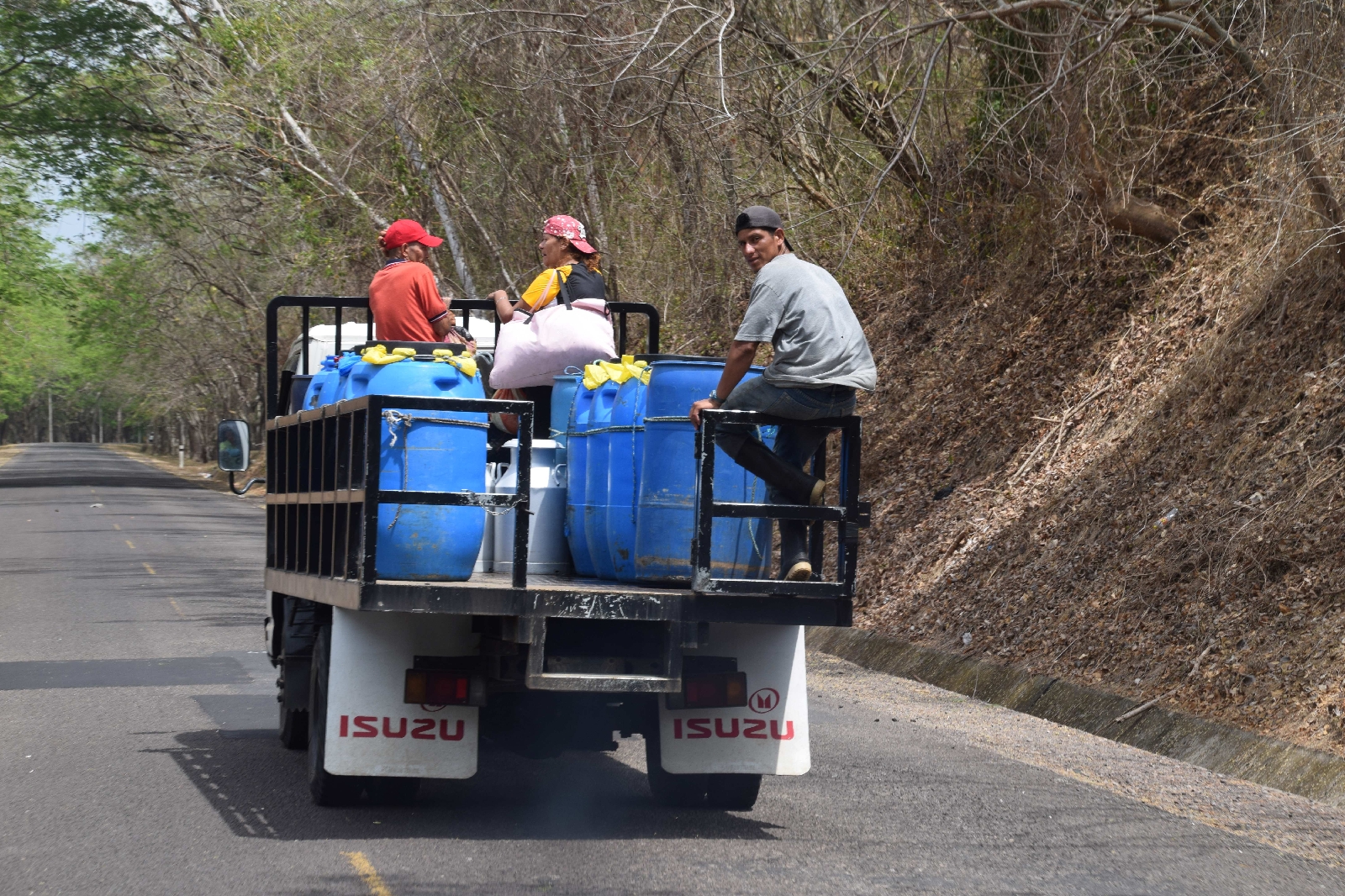
There are other tourists in Nicaragua and some of them have to rely on public transport to get around. This means bus travel. We can't remember whether the contestants on the second series of 'Race around the World' came to Nicaragua or not. If they did, they must have used buses. Buses here are rarely first hand. In most cases, not even second hand. We think second hand chicken buses, American school transport, ended up in Panama and were brightly painted and fitted with high level exhausts. They then end up here and are repainted with some sort of declaration about the Virgin Mary or Jesus to keep people safe. Those who can't afford these buses take stand-up space in lorries or pickups, but usually only for short distances. We breathe significant amount of the public transport fumes every day we ride.The joy of open face helmets. A 4D experience.
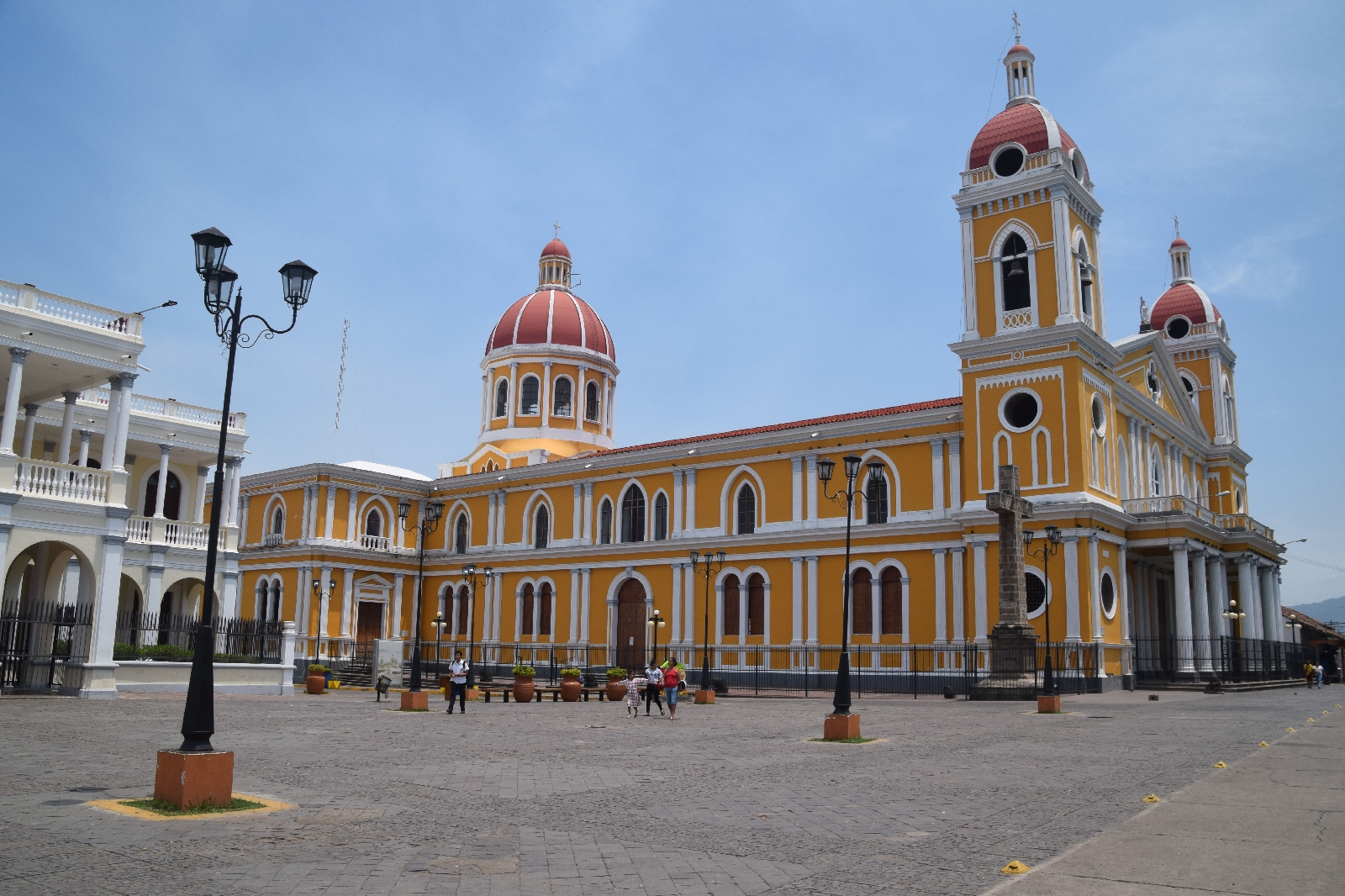
Granada is an interesting place. It has been ransacked a number of times by Europeans, Americans and we should also say the British, as we are no longer European. So despite being 500 years old the oldest buildings seem to date from the 1850s or later, whenever the last time was that they were rebuilt. We don't understand why the city isn't actually on the lake's edge rather than set back about half a mile. It is fundamentally a single storey town with the odd two storey building ... and churches. Not everything is in good condition, let alone very good, but our guide on our walking tour did say that some of the exteriors were deceptive and there were some very nice interiors behind some of them, especially those for the AirBnB market. However there are lots of houses that you can look straight into; they are very poor indeed. They probably wouldn't even be called houses. Touristically it is very quiet. We are the only people staying in our accommodation and were the only ones eating in the restaurant the other night. Perhaps this is another season we don't understand. Apart from the churches, there isn't that much to see for a 'city' that had aspirations of being the country's capital. The churches and a small chocolate museum.
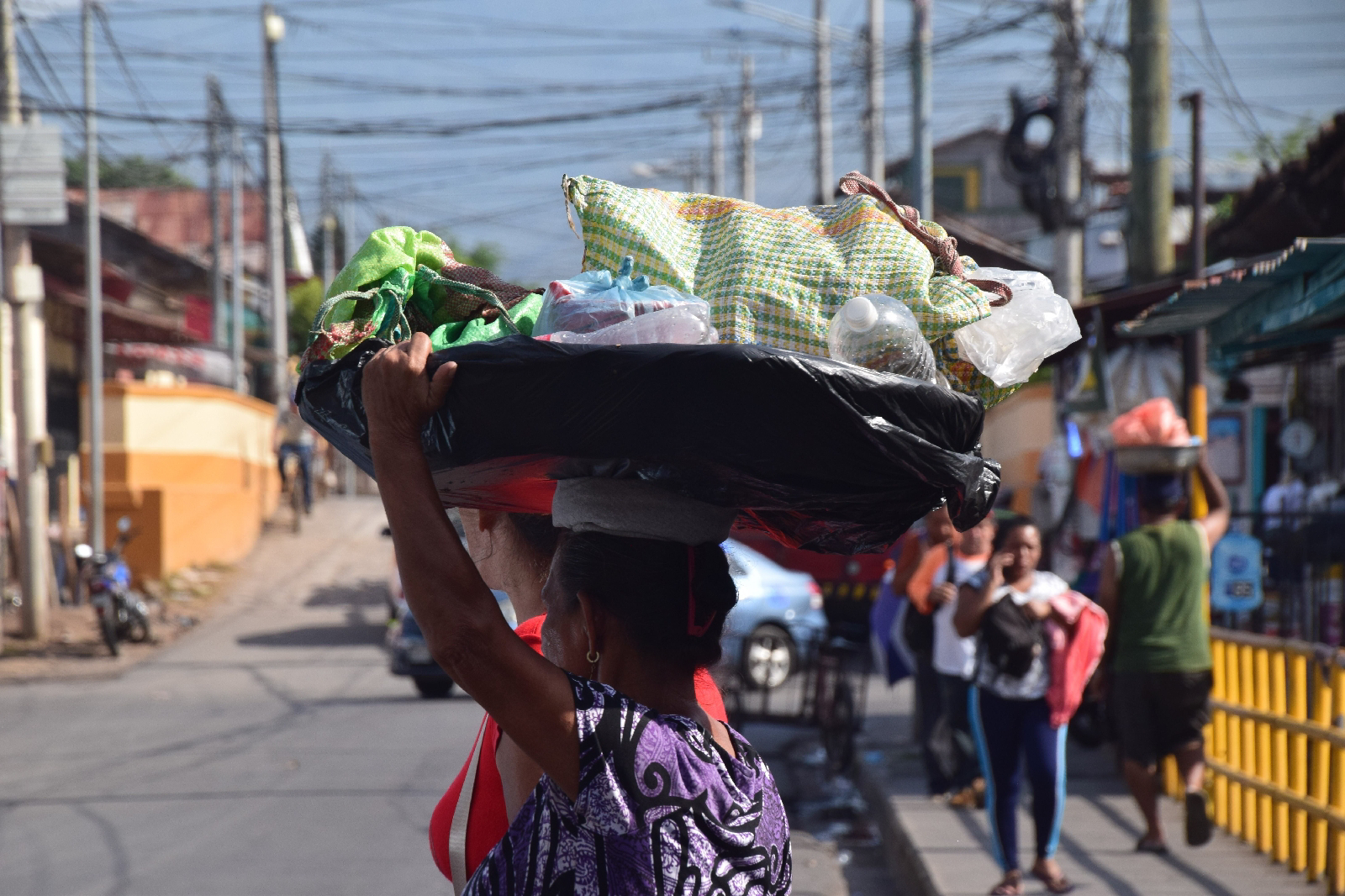
But then there was the market which we had to venture past whenever we went out. Everything you would imagine it would be like.
We did walk around Granada with a guide for three hours and that turned into a conversation about recent politics. What flashed up on our news screens a number of decades -1979 - ago was the Sandanista guerrillas fighting against the Contras and the Contras being supported both openly and covertly by the USA. Daniel Ortega came to power in 1984 on behalf of the Sandanistas, or FSLN, but somehow lost the election of 1990 and remained out of power until 2006. Nicaragua currently has a pretty staunch anti-American policy whereby it aligns itself with, amongst others, Cuba, Russia, China and Venezuela. Daniel Ortega is still in power. There were large scale demonstrations - and deaths and missing people - in 2018 when the government tried to wipe the slate clean economically by binning all types of Social Security. Tough if you've paid into your pension - you're not getting anything now. But he stayed in power and reinforced the army and police. Dictator, moi? There then followed, and still exists, a judicial system based almost on Old Testament (or even the Koran?) values, an eye for an eye... All this was explained to us by our guide who was strongly in favour of the heavy-handed approach despite having spent 40 days in jail post the 2018 troubles. He explained that at that time you simply didn't leave your house if you didn't have to; it wasn't safe. People were being mugged, robbed, killed and there was a law and order breakdown. Now there is no hint of that. You simply don't mess (or stronger term) with those wearing blue or black uniforms. It's currently 10 yrs in jail for stealing a mobile phone. There will be various right wing European politicians interested in this approach, without mentioning the USA Republicans.
Our guide's 40 days in prison was for videoing a couple of police harrassing a homeless person. This constituted a cyber attack on the state. Unfortunately there were two members of police standing behind him whilst he videoed the incident. He spent 20 days in pre-prison waiting to be heard as there was a queue. He then got 20 days but the days served didn't count. He paid 1,000$ to be let out early after 10 days which was accepted, but it took a further 10 days to process. Despite all this he was very much in favour of the heavy hand of the law.
The place is very quiet as we have said. We asked the person who was in charge of our accommodation about the busy season. Apparently the city was heaving during Holy Week with loads of Ticans. We asked about Easter Parades and we were told that they had been banned since 2018. They were happy with this situation as long as it avoided a return to the horrors of 2018.There seem to be a number of truths relating to 2018. Firstly the government proposals to abolish Social Security. This led to riots in a number of cities. The forces of law and order were occupied quelling the uprisings. They over-stepped the mark in a number of areas. Violence and hoodlumism sprang up in the law and order vacuum in the areas the police and military had left. Once the uprisings were subdued the gang violence was addressed. The message we got from all this was that people just want to be able to get on with their daily lives peacefully and in security and this is far more important to them than the flavour of the government.
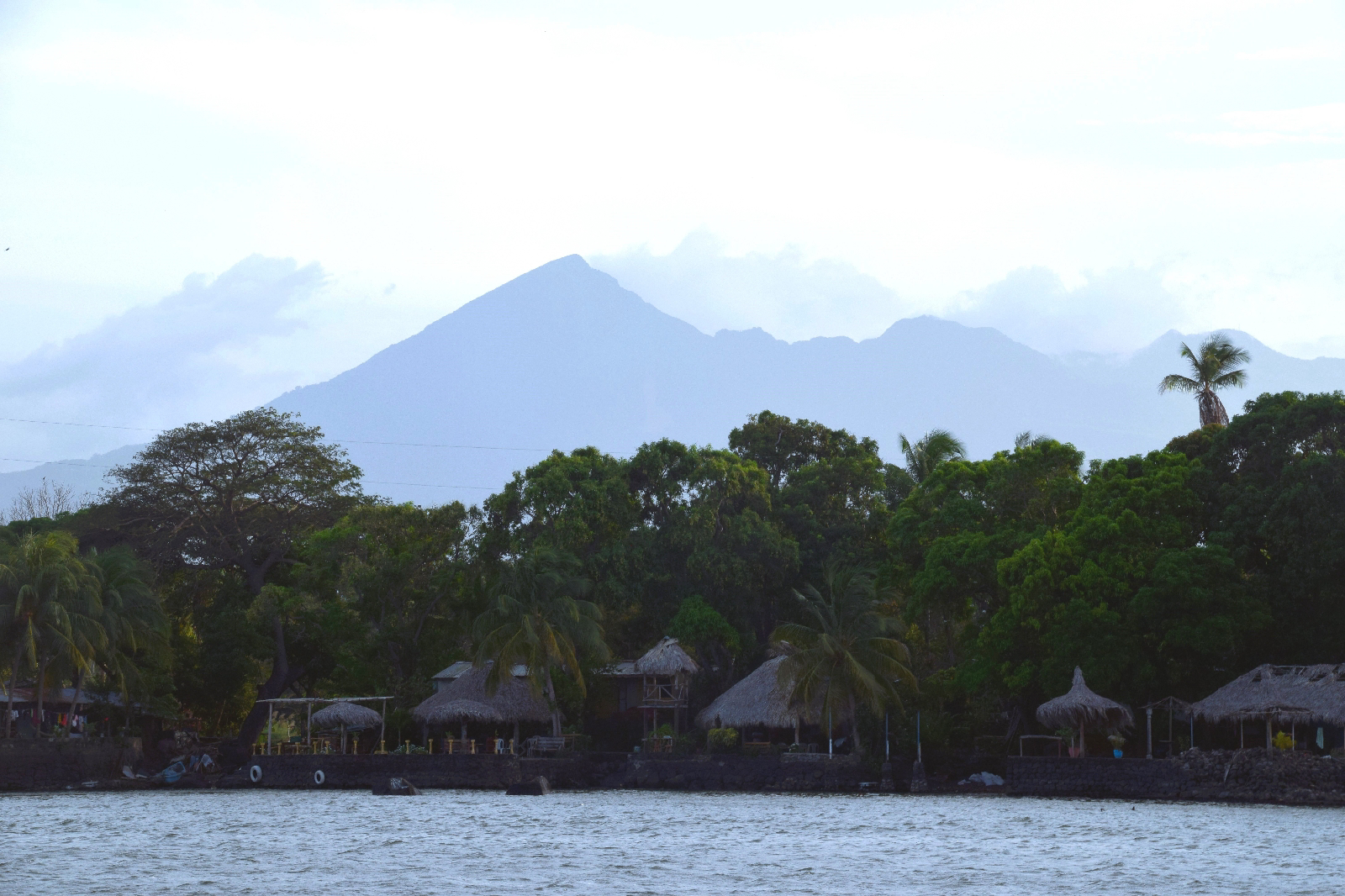
On a slightly lighter note we went on a boat trip around the Isletas which are small islands in the lake near Granada formed from debris that spewed out of the surrounding volcanos. Some were very small, like a house and two trees. Some were an awful lot bigger with mansions built on them. But there was a lot of nature including the three types of monkeys we have seen on our trip so far. Because of their small size and therefore the limited food supply available on the Isletas, the Howler and Capuchin monkeys have learned to swim between isletas. The spider monkeys haven't yet.
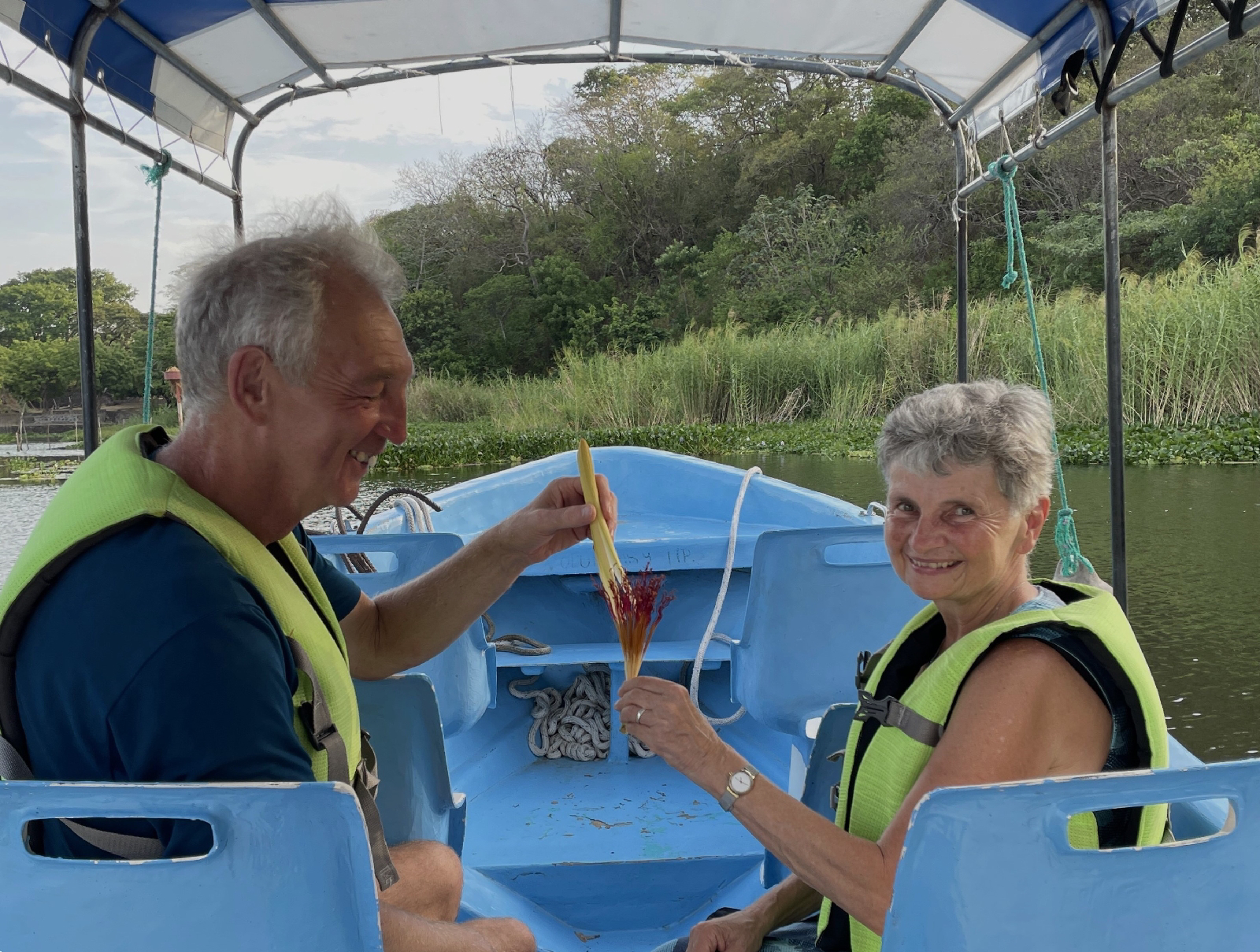
We were also introduced to the 'love flower'. Apparently a marriage proposal can be made when unsheathing the bud and, if a flower is revealed, a binding answer is required. An interesing indigenous tradition.