Saturday, December 16, 2023

18.0 Much ado about...

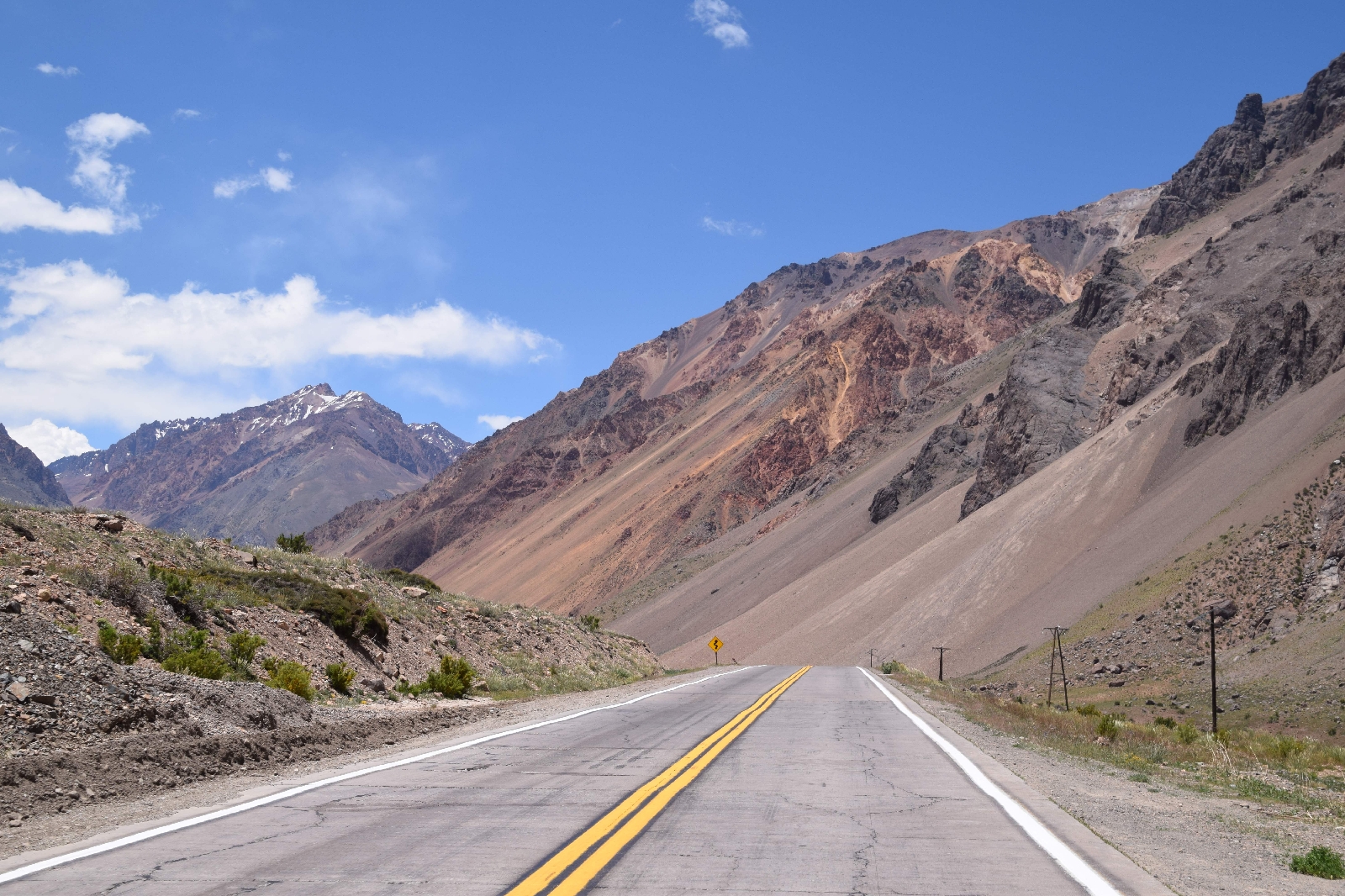
With the bike serviced we had set ourselves the next challenge. This is not quite true as there was no alternative. We have to get to Salta in Argentina  - more about this in a few days time.To get to Salta we have to cross the Andes from Santiago in Chile to Mendoza in Argentina. Somewhat obviously, to cross the mountains you need to take a mountain pass...


The mountain pass is called Paso de Libertadores. It is at an altitude of 3,200m and has the 6,900m Aconcagua towering over it. Valparaíso, where we were a couple of days ago, is clearly at sea level. Santiago is at about 600m above sea level and there is about 100km between Valparaíso and Santiago and a further 100km to Libertadores. We were stressed, sorry, Paul was stressed. Sorry Paul was VERY stressed. Not about the change in elevation but more about how it was going to be achieved.
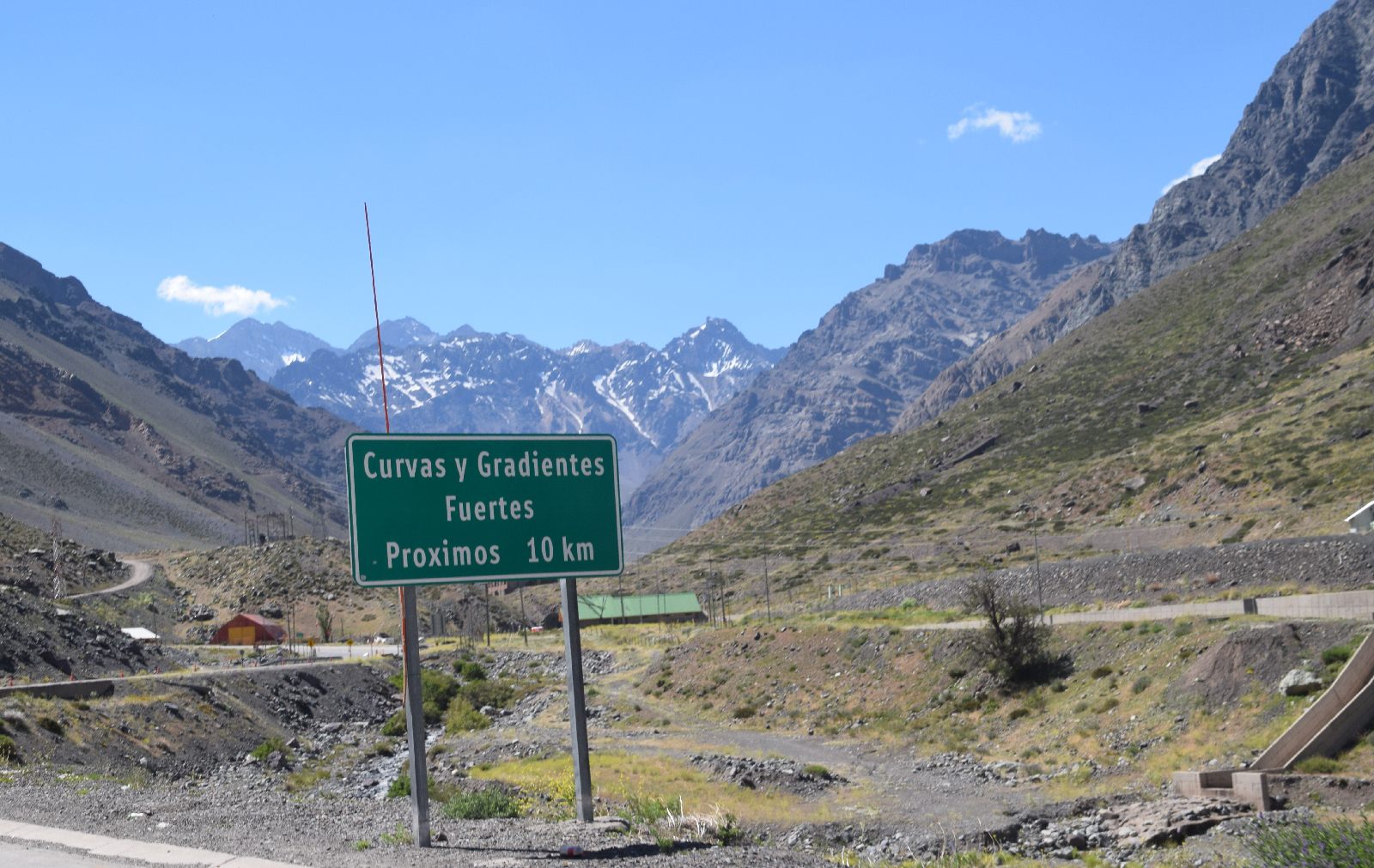

The road on the Chilean side of the border is quite famous. Paul has struggled for a number of years with right hand turns. He has even had a therapy session  with a motorcycle pseudo psychologist about his issue. The joke about us travelling around the world was that we only set off to go to Sainsbury's but because Paul couldn't turn right we ended up going around the world...Anyway the route involved a substantial amount of hairpin bends which by definition means a lot of tight right-handers. This is not a joke; Paul, really has a phobia about this and there are a  vast amount of examples where we have had to paddle around the corners. Especially when going up hill.


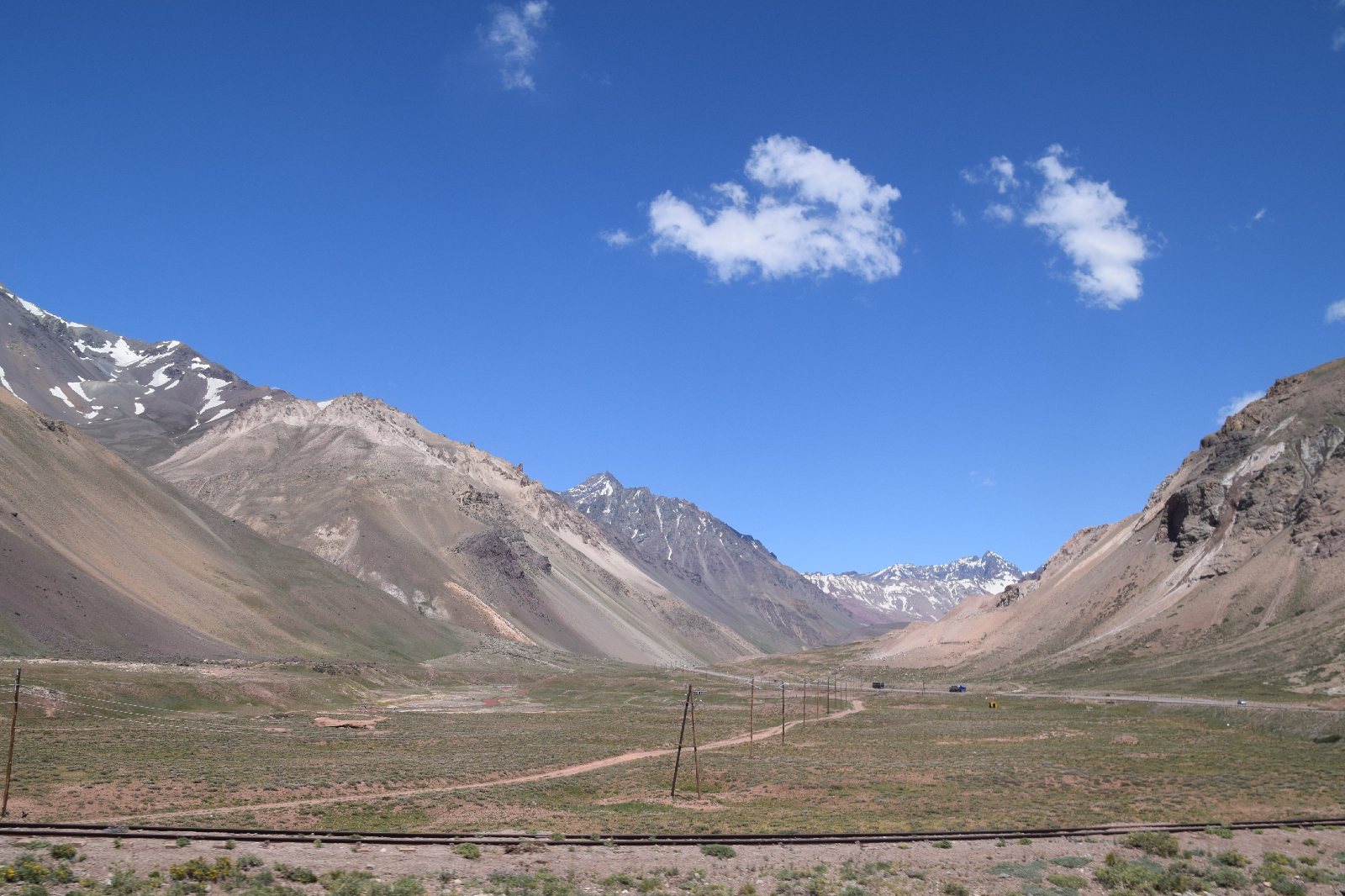
So concentration was at a maximum. Photos along the route on right hand turns were forbidden. The overall photo included here is from the Internet as we daren't stop. But we are writing this after having got to our evening destination and we are still in one piece and so is the bike. And it wasn't too embarrassing. And yes, there was another one of those cyclists proving what wimps we really are. Paul did hum to himself on the right hand turns  - as advised by his 'psychologist. The tunes were Paul's,  not the psychologist's: 'Onward Christian Soldiers', ' London's calling' and 'God didn't make the little green apples'.  A somewhat eclectic selection. 


We were perhaps lucky in that the road was quite quiet and that the weather was good. We didn't lose the 1°C for every 100m climbed - it remained very warm. The road was a concrete one and badly cracked and pot-holed in places but everybody was well-behaved, the oil slicks on the road did not exist and the road was quite wide. Paul had managed to overtake a lot of lorries beford the difficult bit at some roadworks and thus created a buffer for us, stopping people coming right up behind us as we wobbled our way up. Nonetheless it might have been a different story on the Electraglide.

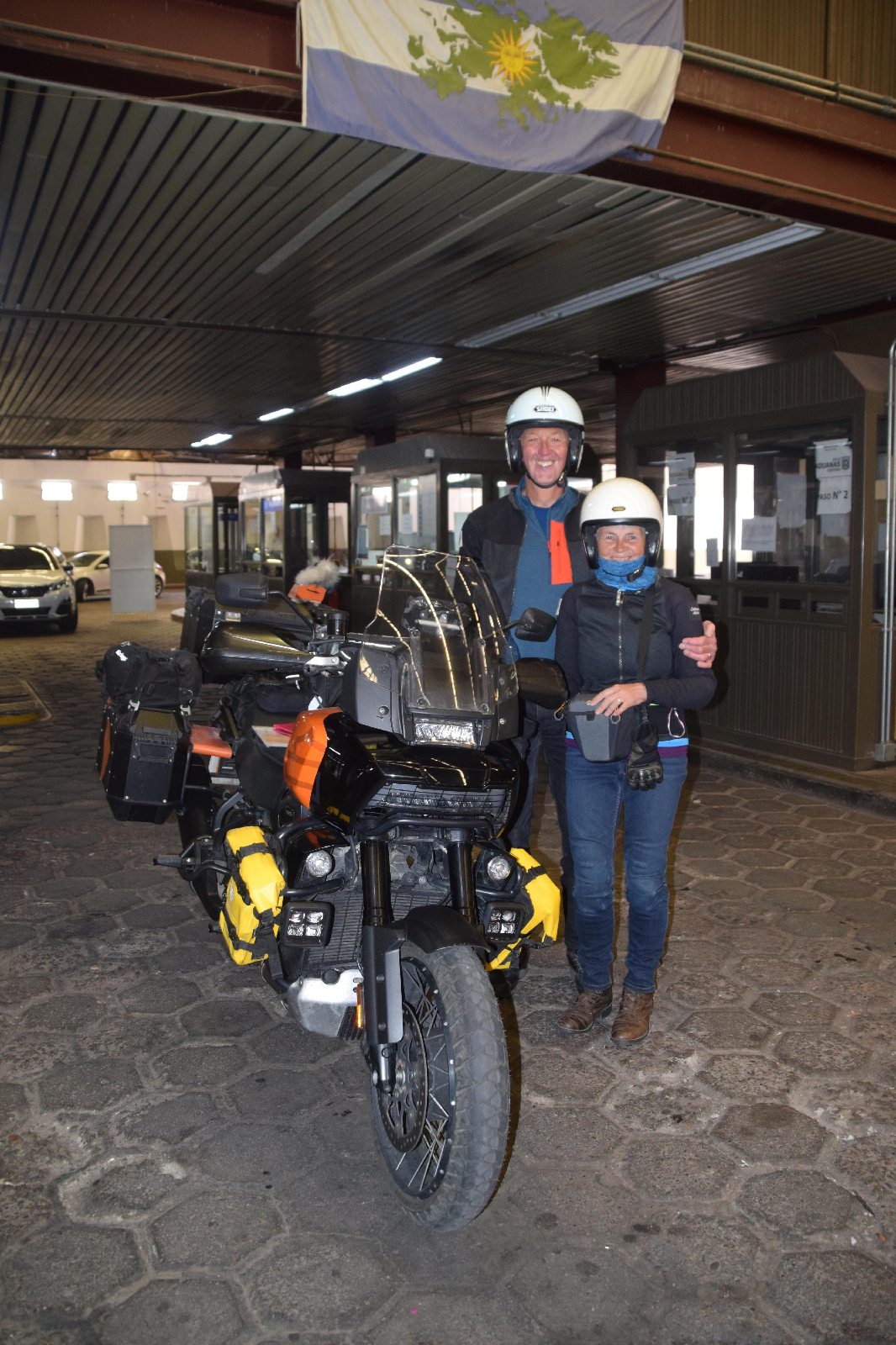
Because we thought we might well find the ride exhausting we decided we would't go as far as Mendoza. We had also been told that the border crossing would take a minimum of 3 hrs. It turned out to be 15 minutes. So shocked were we by this that we hadn't realised we had completed both Chilean and Argentinian formalities simultaneously. When we were in Uzbekistan a guide told us that they never asked the English about their salary, their age or Brexit. Here everybody asks us about our age. Maybe it's because we look decrepit? But nobody asks us about the Falklands. Though maybe the  Chilean Border Officer who took the photo was having a laugh? We left the border facilities looking for the Argentinian crossing and, having not found it, backtracked on ourselves, only to be told by the Border staff that we had indeed cleared both sides of the border and were cleared to continue into Argentina. 

Punta del Inca was just below Aconcagua at the border post, but the wind was building and we found it quite difficult to hold the bike upright so, no photos again, and we rode down into Argentina. The gradient was very shallow,  no dramatic turns and if you forget the first 20km, an exceptionally good surface. And quite stunning canyon scenery.


We are staying somewhere outside of Uspallata. Somewhere a bit off grid. River water and the lights go off occasionally. Adobe brick walls with bamboo and log ceilings. Lots of woven things decorating the walls. A bit Mexican perhaps. But a small swimming pool and magnificent views. It was 29°C in the afternoon and it drops to -25°C in the winter. Surprisingly we are still at 2,000m attitude. It's great.


Friday, December 15, 2023

17.0 Valparaíso/Santiago

We decided we would visit Valparaíso, a UNESCO site before going to Santiago. This was not the original plan, as it is not quite on the way. In fact you have to go to Santiago to get to Valparaíso but anyway... Santiago was necessary in order to get the bike serviced and staying there extra days didn't appeal to us. But in order to make visiting Valparaíso worthwhile, we needed to do a lot of mileage in a couple of days.

We left Pucon in mist and drizzle. The volcano was no longer visible. We had been very lucky with the couple of days we had spent there. A photo of some grey clouds with a caption saying 'there was a volcano hiding there' would not have been the same.

Central Chile was very different. It's the area for strawberries, raspberries and blueberries as almost every hand written sign told us. There was also almost continual activities either side of the road compared to the nothingness of Patagonia. But it was equally boring. You could work out how narrow Chile is as a country because there were small hills to the left which would give onto the coast and an enormous wall of mountains to the right which was the border with Argentina. It would be a lot easier for the cyclists here. There was also vineyards - at last - on the way.

There was a lot of lorry traffic of which a large component was logged timber on its way to being processed. We are not sure about Chile's environmental credentials. There were a few very tiny replanted areas but we were not sure whether they were replacements for logged areas or for forest fire areas, which Chile is prone to.

Valparaíso. Valparaíso is a bit scary. It's a city built on steep hills - far steeper than San Francisco and we came into the bottom of the city and then had to climb up to our accommodation on twisty steep roads with an unknown (to us) priority system.


The city dates from Francis Drake time but started to lose its importance with the advent of the Panama Canal. It's also subject to earthquakes and not much if anything survives from before the 1850's. They have regular shocks, but don't really count them unless they are above 6.5 on the Richter scale. And the tin shacks perched on the sides of the hills survive this. We walked a lot. Lots of steps and even some Victorian era funicular railway/lifts. Even an Anglican church. Valparaíso is now well known for the murals painted on lots of the houses  - those that were bereft of mural had graffiti instead. All helped by seemingly having no planning laws whatsoever.


From Valparaíso we returned to Santiago but this time entered the city. We seemed to be in tunnels for most of the time which were busy, but nothing compared to what was going on at the surface. We had left Valparaíso in a heavy sea mist, again not good for the photos but it was now 32°C in Santiago (real Christmas weather) and we struggled a bit getting to the accommodation but managed to deliver the bike for its service. We braved the Santiago Metro and Bus system and felt quite chuffed with ourselves. We did not feel up to a City Tour in the heat so hung around the main square listening to a youth band belt out Chilean classics, which was actually quite brilliant. 


Our new chums at Harley-Davidson Santiago were able to complete the service and we are off again tomorrow. Back to Argentina.

Monday, December 11, 2023

16.0 Back to Chile


We have crossed the Argentinian/Chile border a number of times and it has been very straightforward. Fundamentally aĺl borders are the same - you do yourselves first, and then the customs temporary importation of the bike. All customs officials look in detail at the bike documentation, but we are never sure what they write down on the forms or whether it is correct or not.  We have never seen anyone holding our documents upside down but suspect that it wouldn't make that much difference anyway. The important thing is that there is a piece of paper.
We were heading for the Chilean Lake District. Our last post was from the Argentinian one - physical geography doesn't recognise political borders so it is probably the same Lake District. But that is not to say that political, borders don't sometimes reflect the physical geography. Anyway, an easy border crossing and only 250km to do in the day.

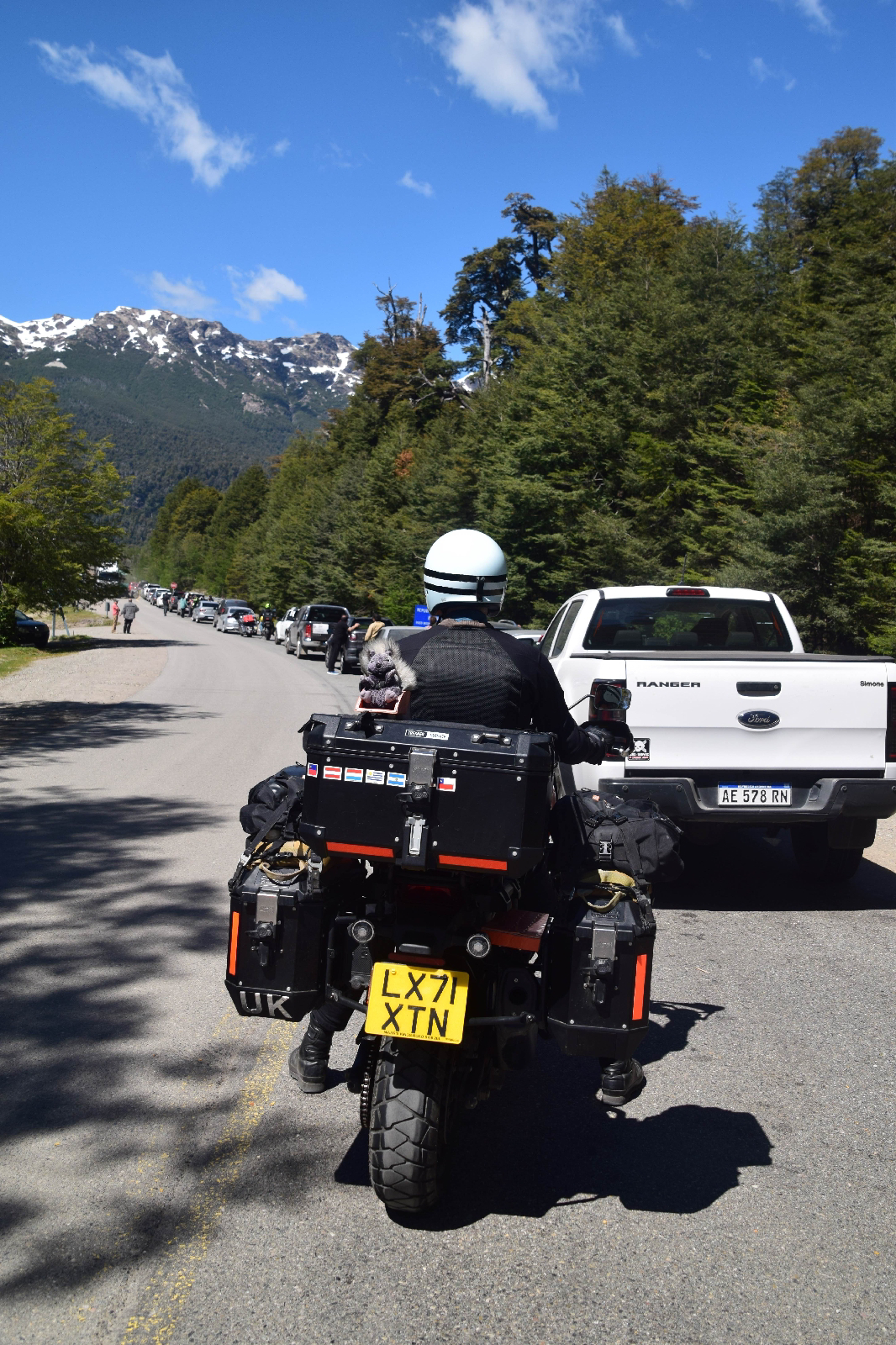
We rode for about 70km and came across stationary traffic which, of course, being on a bike, we overtook  - until we saw it was a queue for the border and we thought we better respect it.  We had however overtaken at least two thirds of the queue and therefore never looked anyone in the face as they sat in their cars. Nothing was moving. It wasn't even the border. It was a uniformed official in a booth. We waited there for about 15 minutes and then the barrier lifted and things started moving. The official asked for our number plate, wrote it down on a piece of paper and gave the piece of paper to us. Two km further on we got to the border. Passport queue was not too long and we did that in probably less than 20 min. Then we had to queue for the customs. 


This is normally very short but this time it went out of the building, beyond the canopy and about 100m up the hill. It was only the Argentinian border but the queue was a combined queue; Argentinians going to Chile and Chileans going to Argentina. For nearly two hours the only people coming out of Argentina were two people on bicycles. More about bicycles in another post because if we're mad...

The queue was diminishing but this was due to Chileans passing into Argentina. We talked to our queue neighbours and: it was a Bank Holiday Friday, it was the start of the summer holidays for some, it was good weather and it was also possible that the Argentinian side of the border hadn't opened on time. Might be due to the Customs Officials not agreeing with the new choice of Argentinian President and his plan to cut burocracy. Anyway we queued in the sun and all went well.

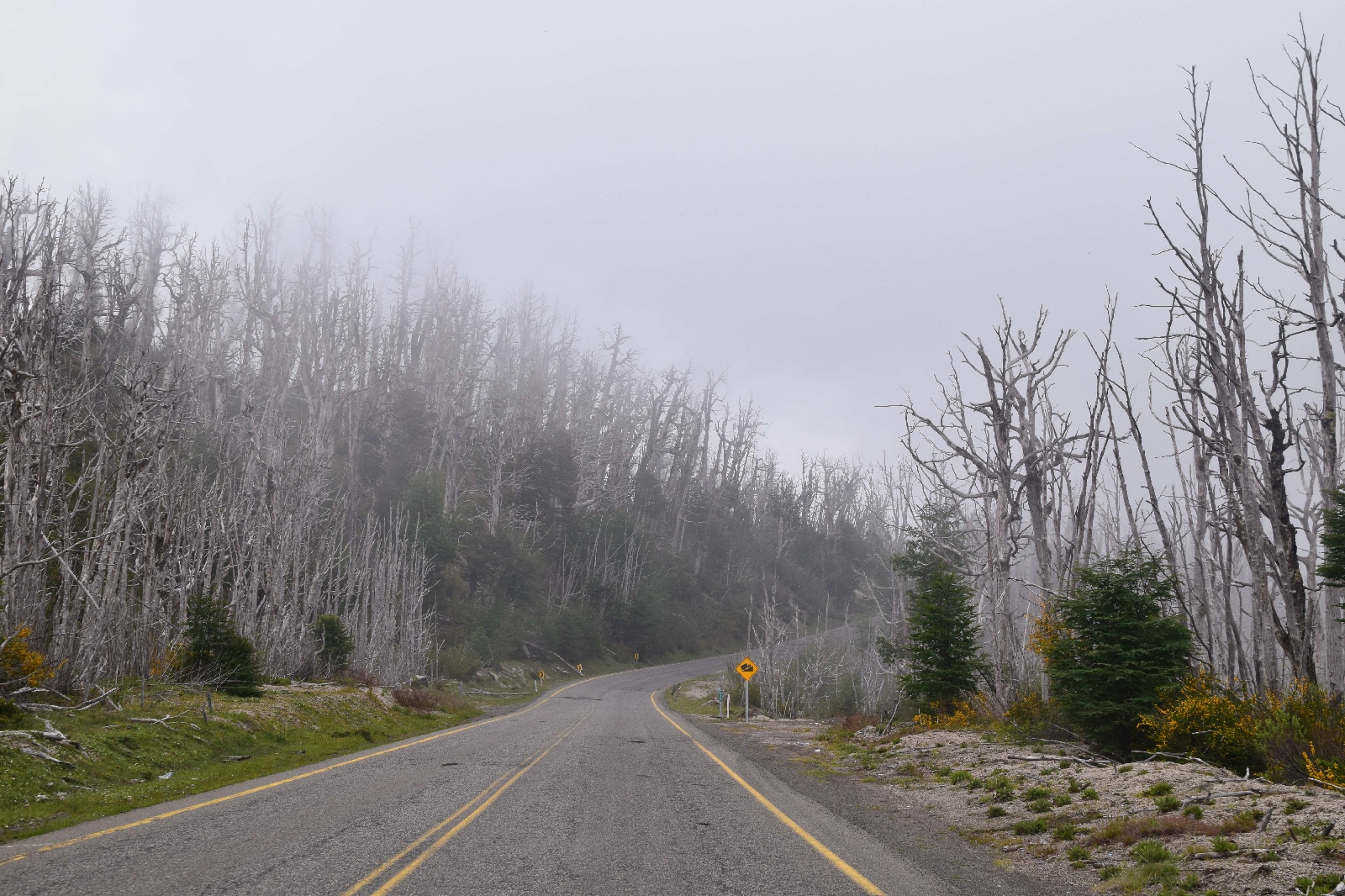
We then left for the Chilean side of the border crossing not knowing it was 50km away, over a twisty mountain pass with snow at the side of the road and riding through cloud with 20m visibility. It was also clear that there was some sort of issue over this zone as at about 25km there was a 'Welcome to Chile' sign and an immediate significant deterioration in the road surface which, with limited visibility, snow and a mountain pass made riding... slow. The cars behind us who had been held up at the border didn't really appreciate our slowness.


We stayed at Osorno. It was a Beatles 'nowhere town'. City even. Apologies citizens of Osorno.

But the following day we got to the northern part of the Chilean Lake District. If we had been more adventurous we would have tried to see more of it, but that would have involved quite a bit of off-road riding. Nonetheless we ended up staying at Pucon, having visited Villarrica on the way. Pucon is just below a live volcano with the town on an orange alert. Apparently this one pops every three to six years and the last time was 2020.

Yes, it is smoking in the photo and it didn't seem to worry the wildlife too much.

Thursday, December 7, 2023

15.0 What a difference a (couple of) days make...


Our short term aim was San Carlos de Bariloche. We had heard of it, unlike some of our other stops so far, but we didn't know why. We hadn't decided whether it was a two, three or four day ride to get there either.

We were still a bit daunted by the weather and not feeling 100% either so we opted for a short stage to Rio Mayo. There is absolutely nothing to say about the ride apart from possibly  a little less wind? We were there just after lunch and there isn't much we can say about Rio Mayo either. It was our first overnight stay in a room without a window. It had an uninsulated heating duct system which you couldn't control and also let you hear what was going on throughout the building. We rather stupidly asked for a knife to butter the breakfast dried toast in the morning, only to be told to use the back of the teaspoon we had so kindly been given with the cup of coffee - black coffee was the best bet as the milk was off.

We didn't hang around long in the morning and we had no booking for that night. Some of our Uruguayan chums had given us a tip for the following evening at Esquel.  We decided that we would ride to Gobernador Costa, see what time it was when we got there and what it was like and then decide whether we stopped there or not. The alternative being to push on to Esquel where they should have a spare room. We didn't stop at Gobernador Costa.

But things started to improve. No wind. Blue sky. Sun. Scenery. And apart from some quite significant potholes, the roads were not just OK but actually good. Potholes are interesting in as much as when the density of potholes in any particular location gets too much they just remove the road altogether and you end up with a stretch of gravel with a rather permanent looking sign indicating its presence. Never any sign of any work being undertaken though.

Anyway Esquel was lovely and so was the Cabana we were staying in and the people who ran it. There were pine trees everywhere and it soon became obvious this was a ski place when there was snow. We were again said 'hello to' by three bikers at the petrol station who had seen our bike at Rio Mayo. It is probably unique in Argentina after all.


We had decided on a rest day. Esquel had Welsh settlers and a narrow gauge steam railway which operated some days as a tourist attraction - not the days we were there. We tried and failed to draw our Western Union money but were promised some for the following day, but we did manage £40's worth from an ATM. Things were looking up!


We went along to the Las Alerces National Park and specifically Lake Futalaufquen. The whole place was magnificent and just about deserted. Just about because we were again stopped by another biker who said he had seen us on the other coast of Argentina and recognised the bike and, as well, we were probably the only people riding a bike in Patagonia with open face helmets!


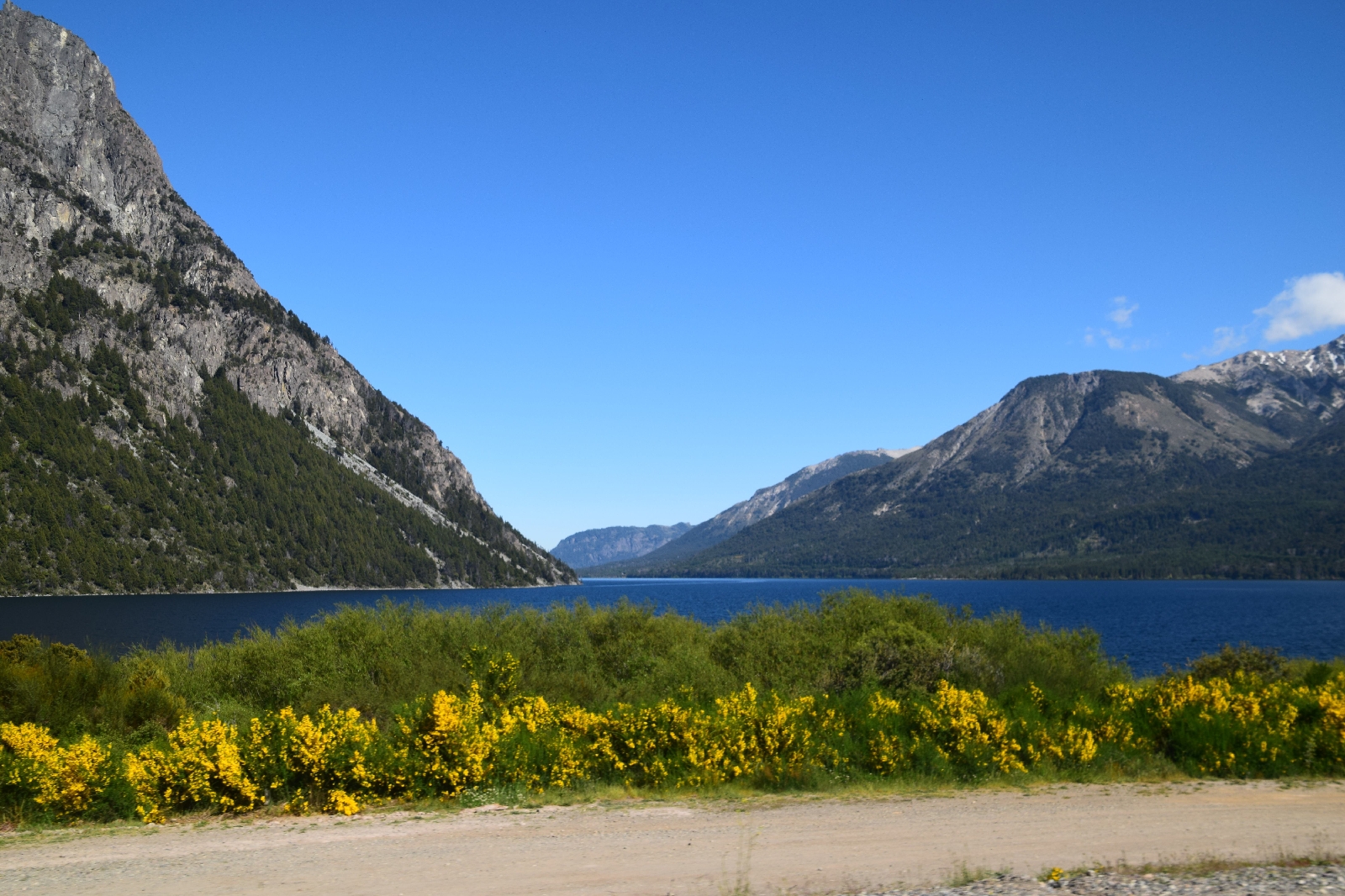
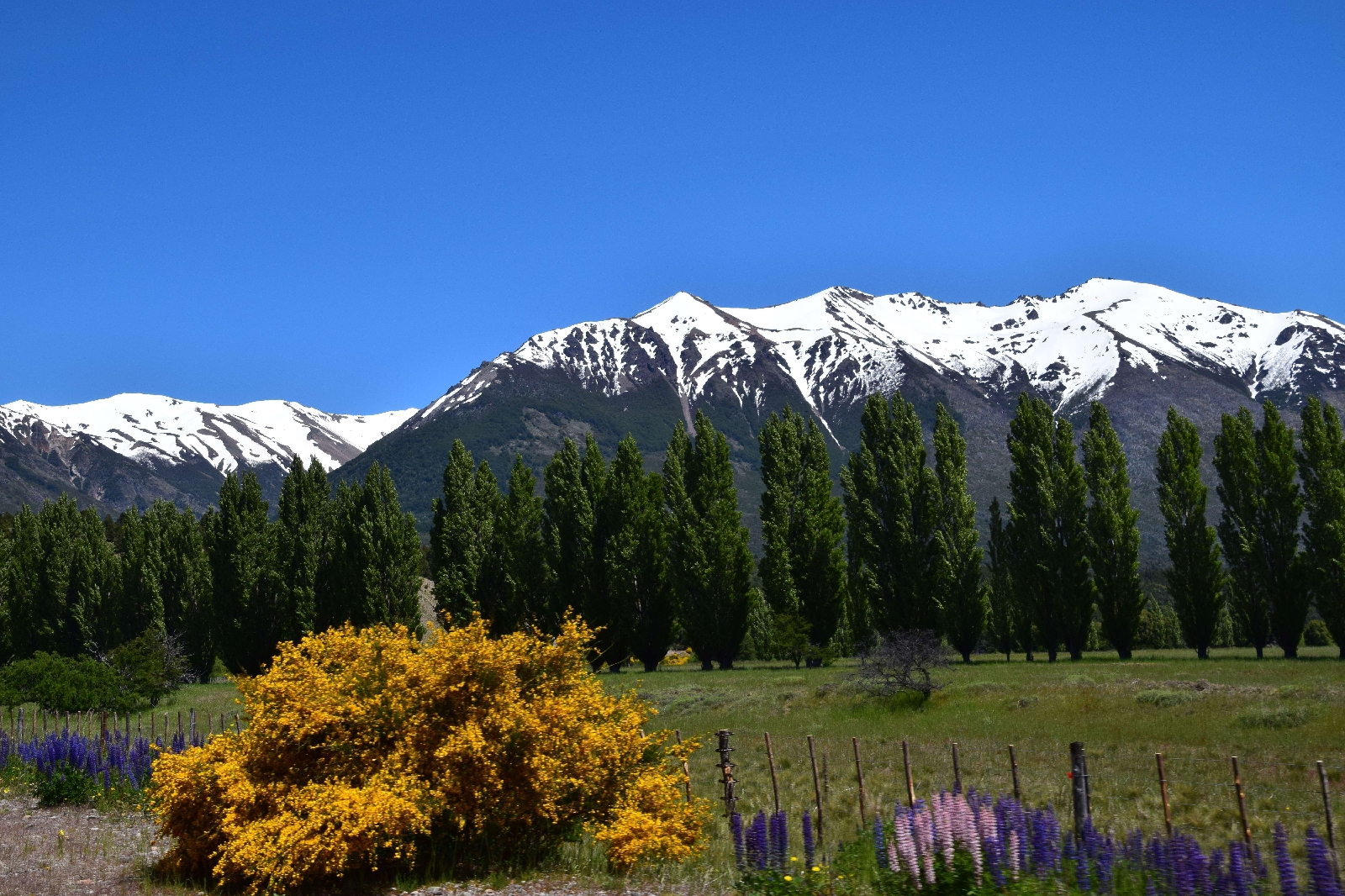
All the roadsides are covered in bright yellow broom with wild lupins everywhere. With that and the pine and monkey puzzle trees and the snow-capped mountains and lakes... We also found a nice restaurant serving Patagonian trout in a mushroom sauce which went down well!


The ride to San Carlos de Bariloche was great. When it is nice like this, both weather and scenery, it really feels like we are somewhere in the south of France, not Argentina. But then again, as we haven't been in Argentina before, we don't really know what it feels like to be here! We don't really understand the town at all. It is big enough to have traffic lights and buses and petrol stations. Our hotel was in prime position overlooking the lake and one block from the main street. It wasn't expensive. There doesnt seem to be any really chic old hotels, but the place probably didn't exist at the turn of the 20th century. The retail offer is either chocolate/ice cream, mountain clothing or tours. As usual all the prime spots for cafes etc on the lakeside or the promenade were totally undeveloped - we just wanted a coffee and maybe a cake sat in the sun overlooking the water but aĺl that was on offer was the high street surrounded by 15yr olds. We are also back to the, 'cam, cam, cambio'  call of Buenos Aires. But this is a very very young place. We think that school summer holidays are approaching and it looks like coach loads of kids are here.The hotels are called things like,  'Alpine' and 'Edelweiss'. The restaurants serve fondue and spatzle. It's a strange place but clearly a destination.


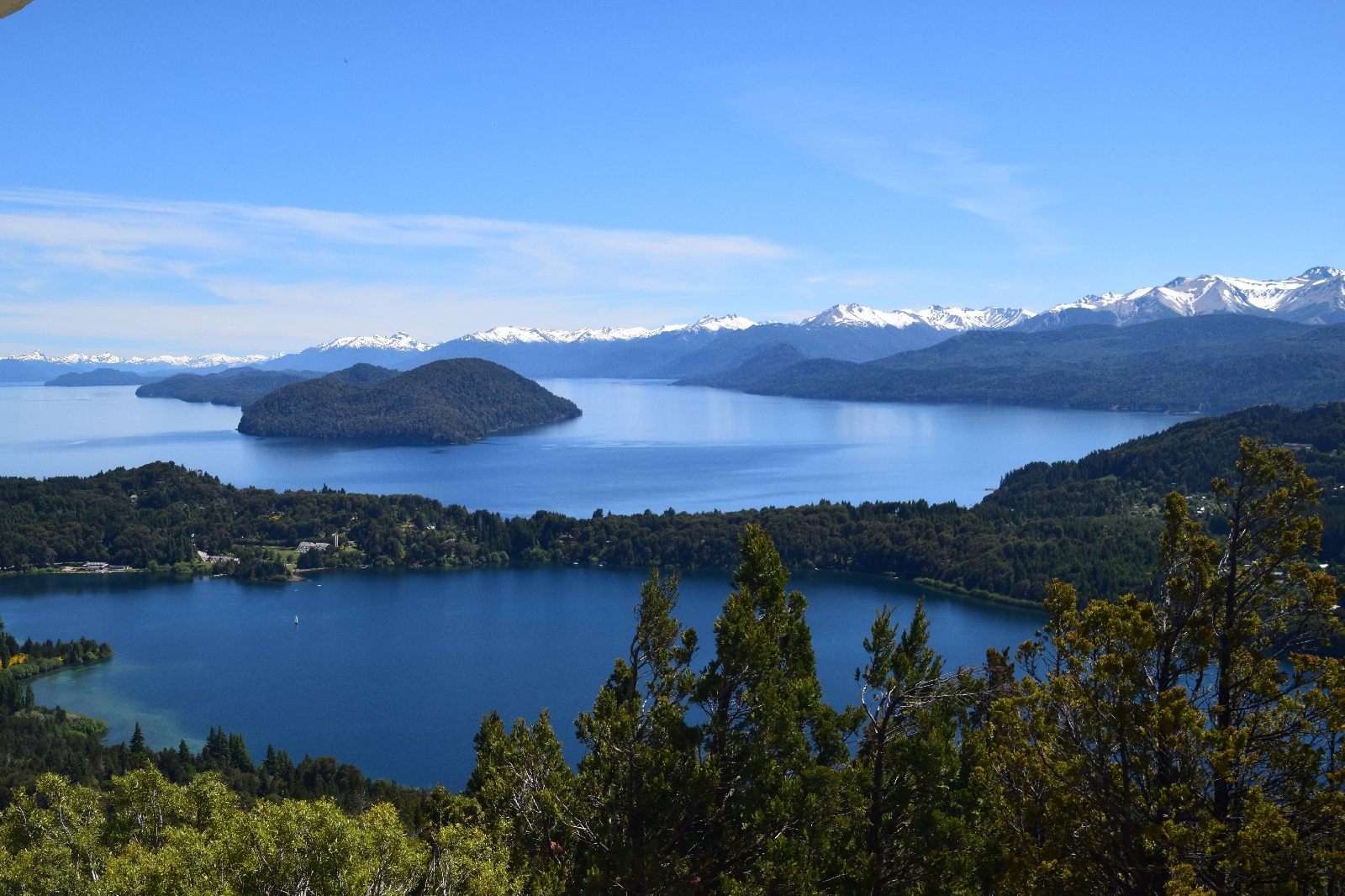
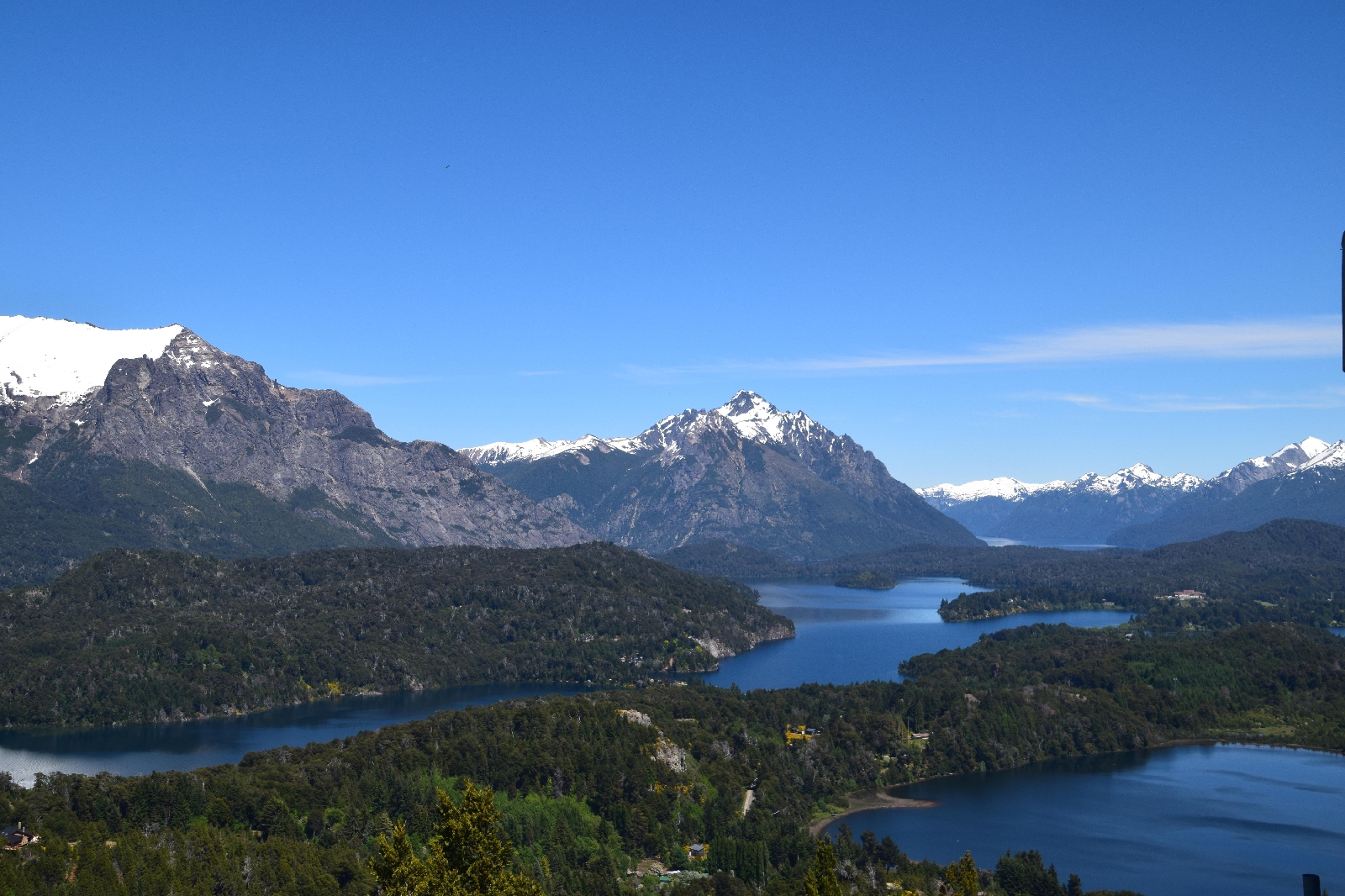
It is nice to relax. And get washing done properly; £1.00 a kilo at the laundry round the corner from the hotel. We also navigated the local bus system to go to a chair lift 18km out of town which gave us spectacular views of the lakes. And the bus journey showed us all the very rich private properties and accommodation along the lake. The Argentinian Atomic and Nuclear Authority is also here on the side of the lake  - bit like Warrington really.  


We never had time for any organised tours, not even the city walking tour of points of interest relating to immigrants from Germany at the end of the second World War.

78.0 Over and out.

Eleven months might be up, but our card for the USA National Parks is still valid and the USA was just across the border. So we took another...